
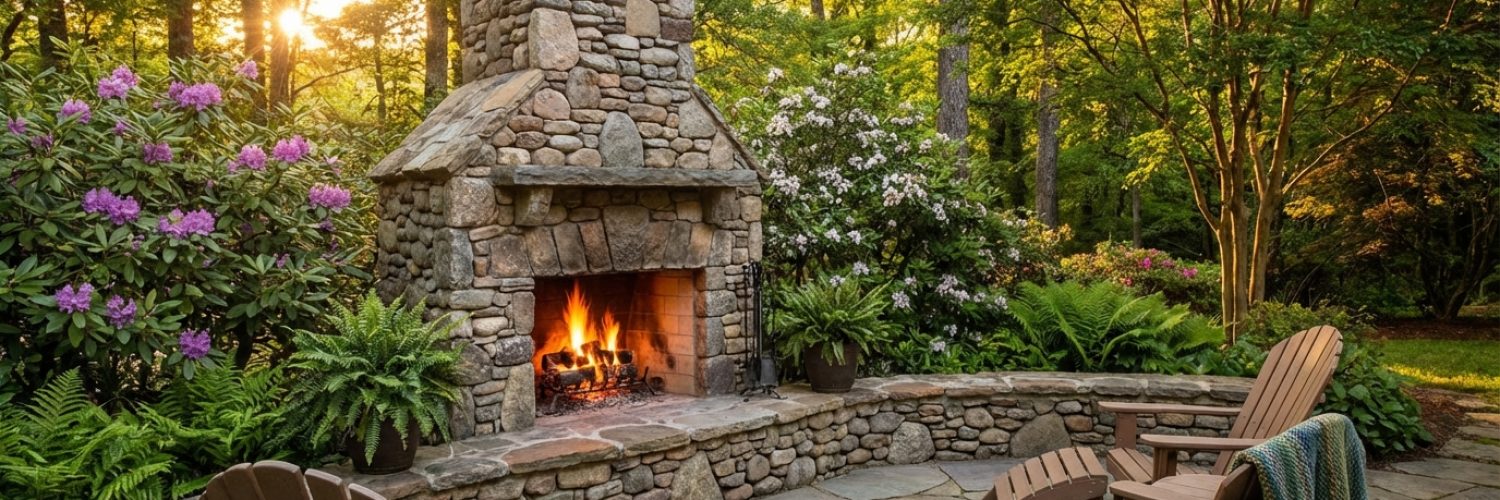
An outdoor fireplace can transform your Waxhaw, NC backyard into a year-round gathering space that adds both functionality and value to your property. With mild winters and long stretches of comfortable evenings throughout the fall and spring, the greater Charlotte area is an ideal location for outdoor living features. Building an outdoor fireplace that complements your existing landscape takes careful planning, the right materials, and an understanding of local building requirements.
This guide walks you through everything you need to know about planning and building an outdoor fireplace that integrates seamlessly with your Waxhaw property.
Planning Your Outdoor Fireplace Project
Before breaking ground, thorough planning ensures your fireplace becomes a natural extension of your landscape rather than an afterthought. The planning phase is where most of the important decisions happen.
Choose the Right Location
Placement is critical for both safety and aesthetics. Position your fireplace at least 10 to 15 feet away from your home, garage, or any wooden structure. Check prevailing wind patterns on your property since smoke drifting toward your house or your neighbors can quickly become a problem.
Consider sightlines from your home’s interior. Many Waxhaw homeowners place their fireplace where it is visible from a kitchen or living room window, creating a visual focal point even when you are indoors. Take advantage of natural topography. If your yard has a slope or natural grade change, building the fireplace into the grade can create a dramatic, built-in look while reducing construction costs.Also consider how the fireplace connects to your existing outdoor spaces. It should feel like a natural destination, not an isolated feature tucked into a far corner. Proximity to your patio, deck, or outdoor kitchen makes the space more functional and inviting.
Select Materials That Match Your Landscape
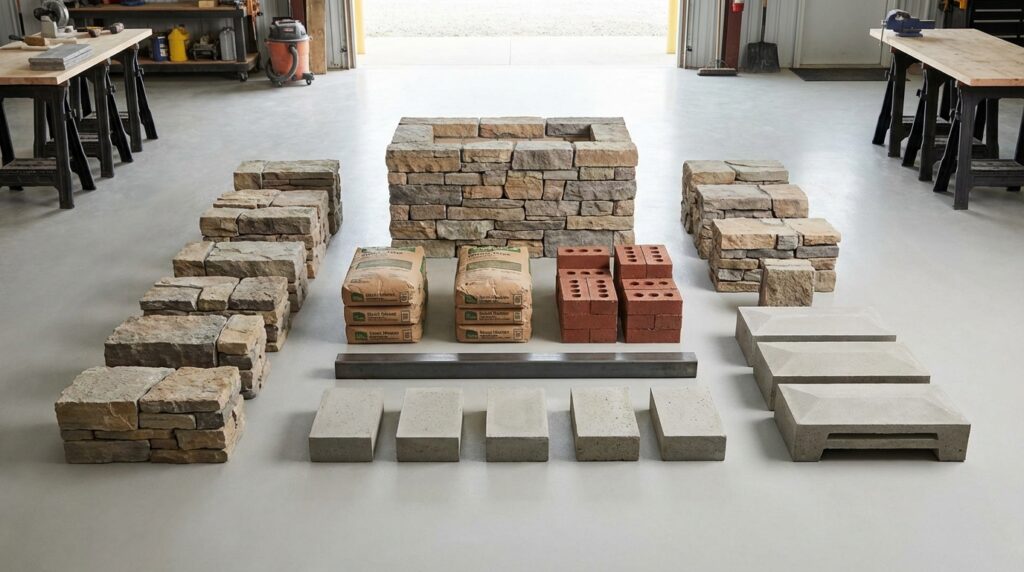
The materials you choose will determine whether your fireplace blends with or clashes against your landscape. For Waxhaw properties, natural stone is a popular choice because it complements the rolling terrain and mature tree canopy that define much of Union County.
Common material options include:
- Natural stacked stone provides an organic, textured look that pairs well with wooded lots and natural landscapes. Fieldstone, bluestone, and Tennessee flagstone are all excellent choices for the Charlotte area.
- Brick offers a classic, traditional appearance that works particularly well with Colonial and Craftsman-style homes common in Waxhaw neighborhoods like Cureton and Waxhaw Creek.
- Manufactured stone veneer delivers the look of natural stone at a lower price point while offering consistent color and texture. It is lighter than natural stone, which can simplify the construction process.
Stucco or concrete finishes create a clean, modern aesthetic that works well with contemporary home designs and can be painted to match your home’s exterior.
Consider Size and Scale
An outdoor fireplace should be proportional to your yard and entertaining space. A massive stone fireplace can overwhelm a small patio, while a modest firebox may look lost in a large backyard. As a general guideline, the fireplace opening should be wide enough to create meaningful warmth for a seating area of 6 to 8 people.
Standard outdoor fireplaces typically stand 6 to 8 feet tall including the chimney, with a firebox opening of 36 to 48 inches wide. The surrounding structure and hearth area usually extends 5 to 8 feet on either side. Work with these proportions as a starting point and adjust based on your specific space.
The Outdoor Fireplace Construction Process
Building an outdoor fireplace involves several distinct phases. Understanding each step helps you plan timelines and coordinate with your landscape contractor effectively.
Foundation and Base Preparation
Every outdoor fireplace needs a solid foundation to prevent settling and cracking. In Waxhaw, where the soil is primarily Piedmont clay, proper foundation work is especially important. Clay soils expand and contract with moisture changes, which can shift an improperly supported structure over time.
A typical foundation involves excavating 12 to 18 inches below grade, compacting the subbase, and pouring a reinforced concrete footing that extends beyond the fireplace footprint by at least 6 inches on all sides. The footing should be a minimum of 6 inches thick with rebar reinforcement.
Building the Firebox and Structure
The firebox is the heart of your fireplace and must be built with fire-rated materials. Firebrick, also called refractory brick, lines the interior of the firebox because it can withstand temperatures exceeding 2,000 degrees Fahrenheit without cracking.
The outer structure is built around the firebox using your chosen facing material. A steel lintel spans the top of the firebox opening to support the weight above. The smoke chamber above the firebox narrows into the flue, directing smoke upward through the chimney.
Chimney Construction and Draft
A properly designed chimney ensures smoke draws upward rather than billowing into your seating area. The chimney height, flue size, and firebox proportions all work together to create adequate draft.
For most residential outdoor fireplaces, the chimney should extend at least 2 feet above any structure within 10 feet. A damper at the top of the firebox helps control airflow and keeps rain and debris out when the fireplace is not in use.
Gas starter lines can be added during construction for easier fire lighting. If you are considering a full gas fireplace conversion in the future, having the gas line installed during the initial build is far more cost-effective than retrofitting later.
Finishing and Curing
After the structure is complete, finishing details bring the project together. Capstones on the chimney top prevent water intrusion. A hearth extension in front of the firebox provides a safe area for sparks and gives the fireplace a finished, substantial appearance.
New masonry needs time to cure before first use. Allow at least 7 to 10 days for the mortar to fully set, then start with small fires and gradually increase the fire size over several sessions. This slow curing process prevents thermal shock that could crack the masonry.
Integrating Your Fireplace with the Surrounding Landscape
The difference between a fireplace that looks dropped into a yard and one that looks like it belongs there comes down to landscape integration.
Plant Selection Around Your Fireplace
Choose plants that create a natural frame around the fireplace area without creating fire hazards. Keep combustible vegetation at least 5 feet from the fireplace structure. Heat-tolerant perennials like Russian sage, lavender, and ornamental grasses work well near outdoor fireplaces because they are drought-tolerant and handle radiant heat.
For the broader planting beds surrounding the fireplace patio, native North Carolina plants like inkberry holly, sweetspire, and muhly grass provide year-round interest and require minimal maintenance once established. These plants thrive in Waxhaw’s USDA Zone 7b/8a climate without excessive watering or fertilization.
Hardscape Elements That Tie It Together
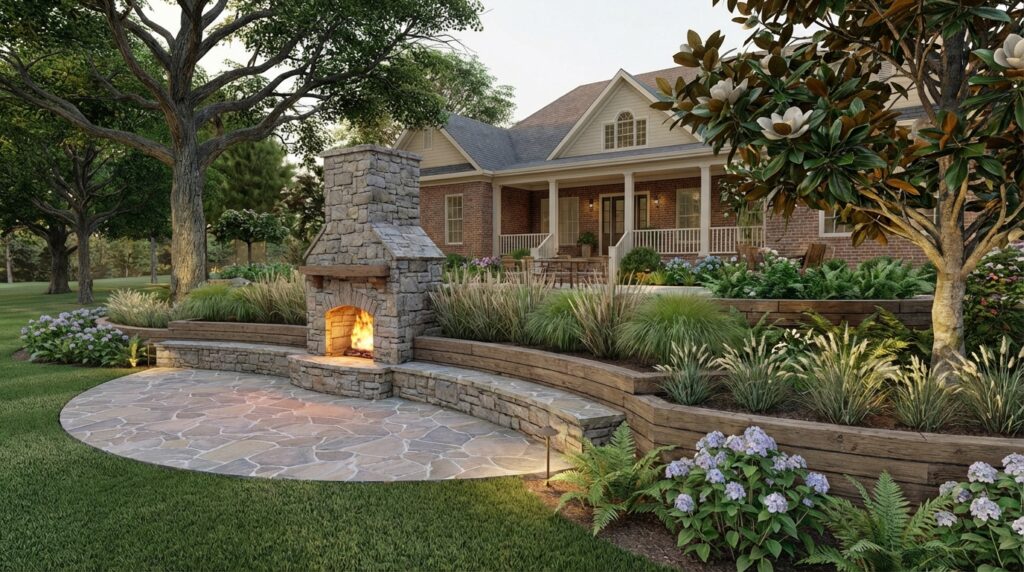
Your fireplace should connect to the rest of your outdoor living space through cohesive hardscaping. A flagstone or paver patio extending from the fireplace to your deck or back door creates a natural flow. Retaining walls built from matching stone unify the space, especially on sloped Waxhaw lots where grade changes are common.
Built-in seating walls flanking the fireplace serve double duty as both functional seating and visual anchors that make the fireplace feel integrated rather than freestanding. A wood storage alcove built into the base keeps firewood accessible and dry while adding architectural interest.
Landscape Lighting Design
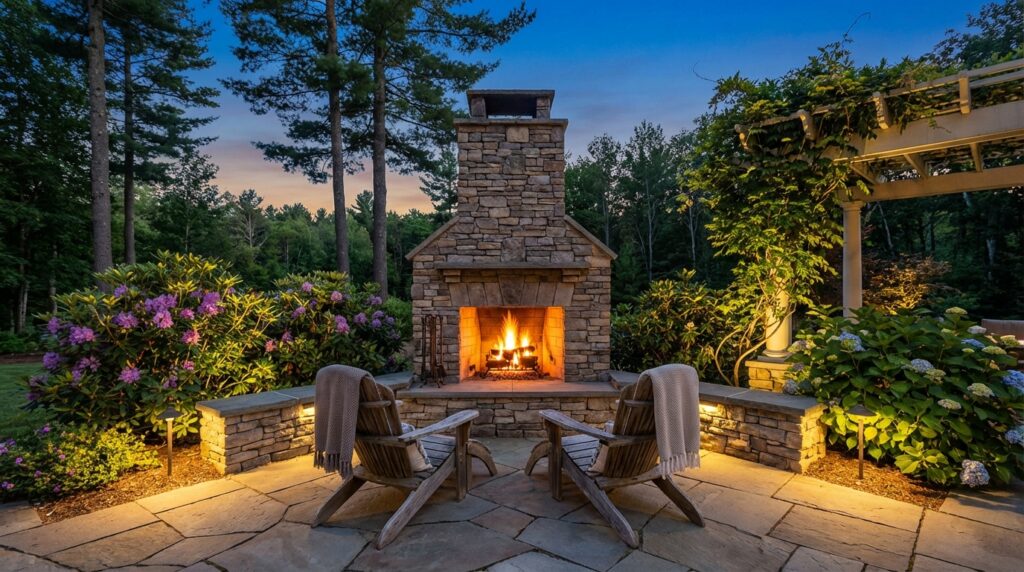
Professional landscape lighting around your fireplace area extends the usable hours and highlights the masonry work. Low-voltage uplights at the base of the chimney create dramatic shadow effects on the stone texture. Path lighting along walkways leading to the fireplace ensures safe navigation after dark.
Consider how the firelight itself contributes to the overall lighting scheme. The warm glow of a fire often provides sufficient ambient light for the immediate seating area, so supplemental lighting works best when focused on the perimeter and pathways.
Permit Requirements in Waxhaw, NC
Before starting construction, check with the Town of Waxhaw and Union County regarding permit requirements. Outdoor fireplaces in Waxhaw typically require a building permit if they include a chimney or exceed certain height thresholds. Setback requirements dictate minimum distances from property lines, which vary depending on your zoning classification.
Your contractor should handle the permitting process, but it is worth understanding the requirements upfront so they do not delay your project timeline. Permit processing in Union County generally takes 2 to 4 weeks.
Why Work with a Professional Landscape Contractor
While some homeowners consider outdoor fireplace construction a DIY project, the structural, safety, and aesthetic complexity involved makes professional installation the better choice for most Waxhaw properties. A licensed landscape contractor understands local soil conditions, building codes, and the design principles that ensure your fireplace enhances your property rather than detracting from it.At JH Landscapes, we design and build custom outdoor fireplaces that integrate with the full scope of your landscape. From the initial site evaluation through final planting, every element is planned to work together. If you are considering an outdoor fireplace for your Waxhaw property, call us at (704) 999-0976 to schedule a consultation.
Frequently Asked Questions
How long does it take to build an outdoor fireplace?
Most outdoor fireplace projects in Waxhaw take 2 to 4 weeks from foundation to completion, depending on the size and complexity of the design. Weather can extend timelines during the rainy spring months, so many homeowners schedule construction for late summer or early fall.
Do I need a permit for an outdoor fireplace in Waxhaw, NC?
In most cases, yes. Union County requires a building permit for permanent outdoor fireplace structures. Your landscape contractor should manage the permitting process as part of the project scope.
What is the best fuel source for an outdoor fireplace?
Wood-burning fireplaces provide the most authentic experience with natural crackling sounds and a traditional campfire smell. Gas fireplaces offer push-button convenience and cleaner operation. Many Waxhaw homeowners choose wood-burning with a gas starter for the best of both worlds.
Can I build an outdoor fireplace on a slope?
Yes. Sloped properties are actually well-suited for outdoor fireplaces because the grade change can be used to create built-in seating areas and terraced landscapes around the fireplace. Proper grading and drainage are essential on sloped sites.
What is the best material for an outdoor fireplace in North Carolina?
Natural stone is the most popular choice in the Waxhaw and greater Charlotte area because it complements the regional landscape and withstands the seasonal temperature fluctuations common in the North Carolina Piedmont.
How far should an outdoor fireplace be from my house?
Maintain a minimum clearance of 10 feet from your home and any combustible structures. Local fire codes may require additional setback distances, so confirm requirements with your contractor or the Union County building department before finalizing placement.