
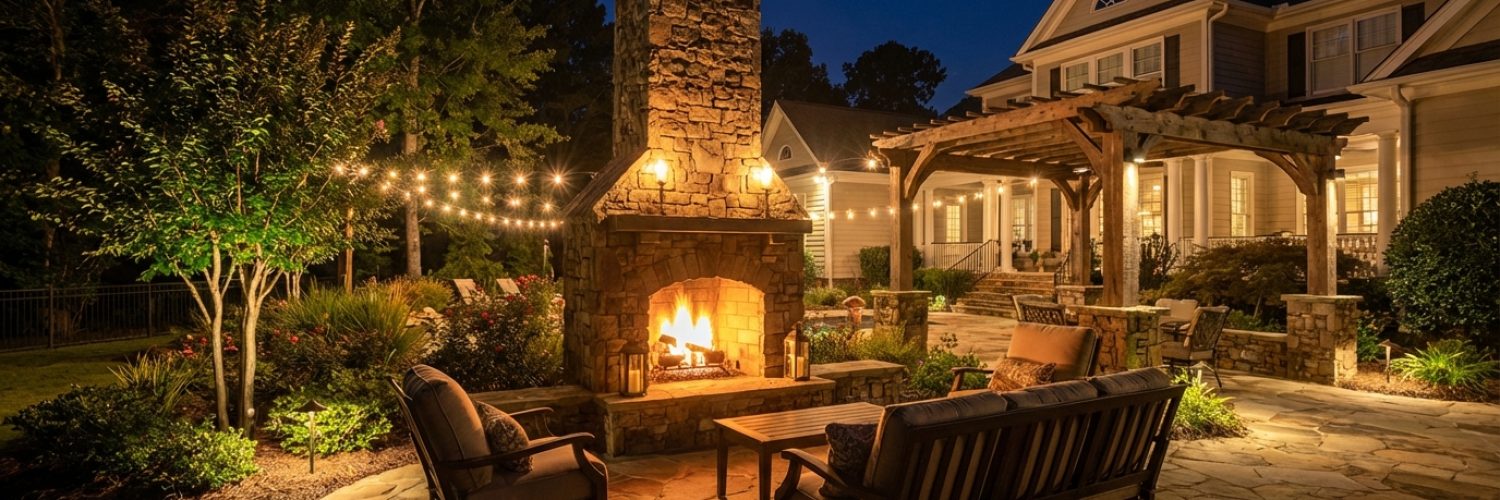
Adding a fire feature to your Waxhaw, NC backyard is one of the best investments you can make in your outdoor living space. A well-designed fire feature extends your usable outdoor season well into the cooler fall and early spring months and creates a natural gathering point for family and friends. The question most homeowners face is whether to install an outdoor fireplace or a fire pit.
Both options have distinct advantages, and the right choice depends on your property, your budget, your lifestyle, and how you envision using the space. This guide compares outdoor fireplaces and fire pits across every factor that matters so you can make a confident decision for your Waxhaw home.
What Defines Each Option
Before comparing the two, it helps to understand what each option includes at its core.
An outdoor fireplace is a permanent masonry structure with a firebox, chimney, and typically a hearth area. It directs flames and smoke vertically through the chimney, creating a focal point that resembles an indoor fireplace brought outdoors. Outdoor fireplaces are built from stone, brick, or manufactured stone and usually stand 6 to 8 feet tall.
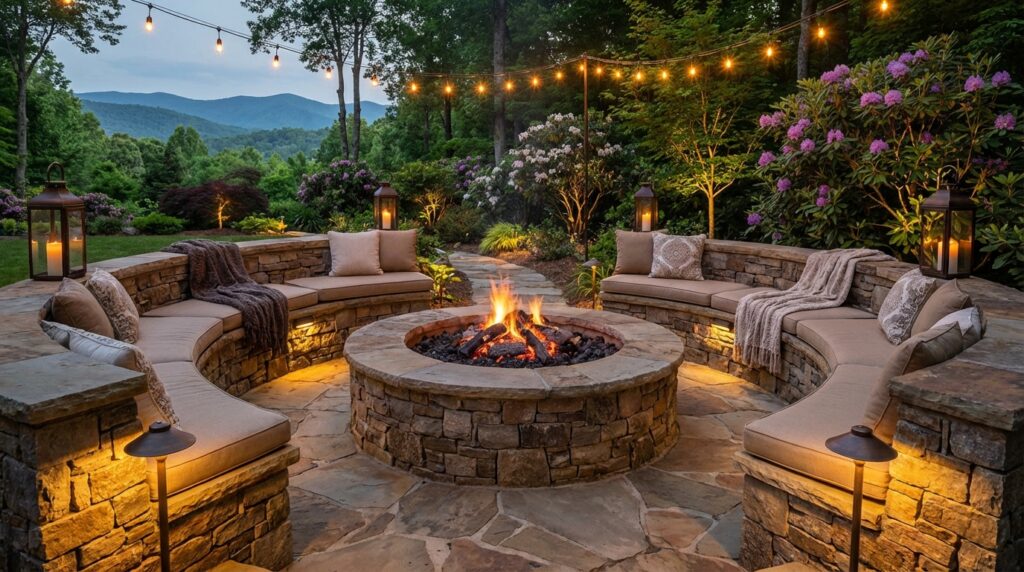
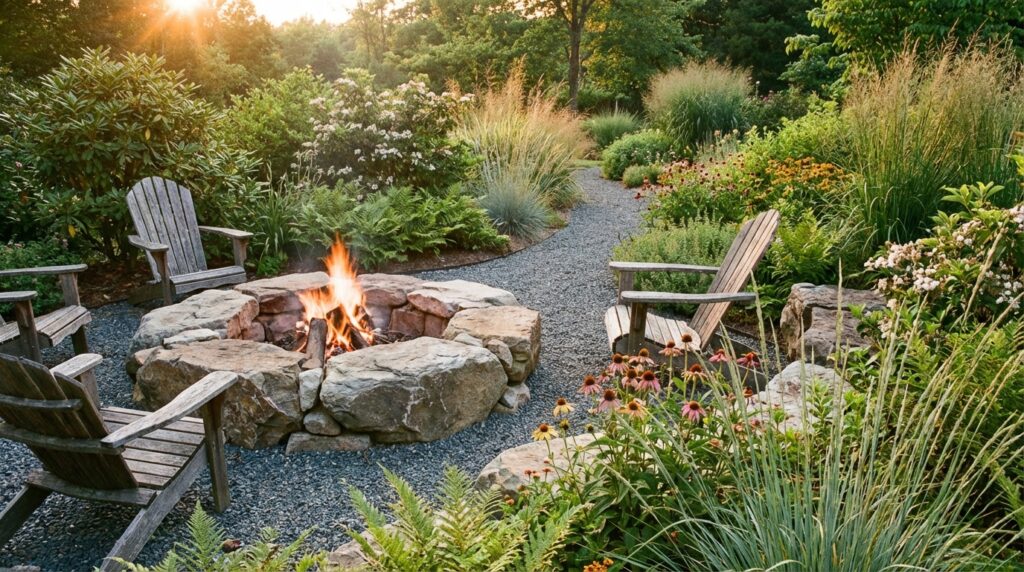
A fire pit is an open or semi-enclosed fire feature at ground level or slightly raised. Fire pits can be as simple as a ring of stones or as refined as a custom-built stone or concrete structure with a gas burner. They radiate heat in all directions, creating a 360-degree gathering space.
Design and Aesthetic Impact
The visual presence of these two features differs significantly, and this is often the deciding factor for homeowners who have a clear design vision.
Outdoor Fireplace Aesthetics
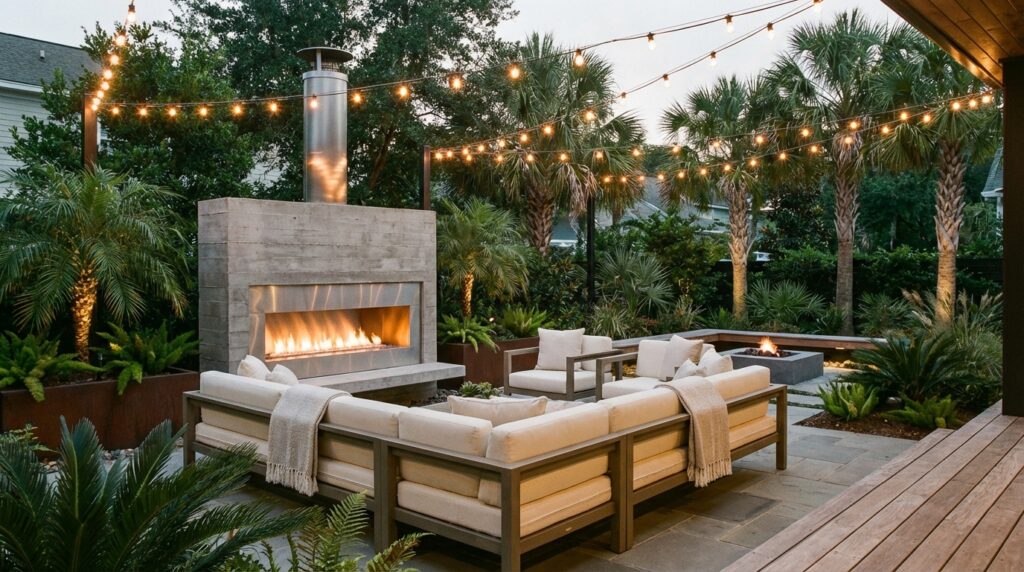
An outdoor fireplace is a statement piece. The vertical structure with a chimney creates an architectural element that anchors your outdoor living area and draws the eye upward. Fireplaces work particularly well as the backdrop to a seating area or patio, creating a defined “outdoor room” with a clear focal wall.
For Waxhaw properties with mature trees and established landscapes, a stone fireplace blends naturally with the wooded Piedmont environment. It adds a sense of permanence and craftsmanship that complements traditional and transitional home styles.
Fire Pit Aesthetics
A fire pit creates a more casual, communal atmosphere. The open design encourages a full circle of seating and a more informal gathering dynamic. Fire pits work well as the centerpiece of a larger patio or as a secondary feature in a backyard that already has a grill, outdoor kitchen, or other focal elements.
Round fire pits pair naturally with curved patio designs and organic landscape layouts. Square or rectangular fire pits suit modern, linear spaces with clean edges. The lower profile of a fire pit keeps sightlines open, which is an advantage if your Waxhaw property has a view you want to preserve.
Cost Comparison
Budget plays a significant role in most homeowners’ decisions, and there is a meaningful cost difference between these two options.
Fire Pit Costs
Fire pits are the more affordable option in nearly every category. A quality custom-built stone or block fire pit in the Waxhaw area typically costs $1,500 to $5,000 for a wood-burning unit. Gas fire pits with a built-in burner and gas line installation run $3,000 to $7,000.
Prefabricated fire pit kits offer an entry point of $500 to $2,000, though these lack the custom look and longevity of a professionally built unit.
Outdoor Fireplace Costs
Outdoor fireplaces require more materials, more labor, and more complex construction. A custom-built outdoor fireplace in Waxhaw generally ranges from $3,000 to $20,000 or more depending on the size, materials, and additional features. The chimney construction alone represents a significant portion of the cost that simply does not exist with a fire pit.
For homeowners working with a limited budget who still want a high-quality fire feature, a fire pit delivers excellent value. If budget is flexible and you want a true architectural statement, a fireplace justifies the investment.
Installation Process and Timeline
The scope of installation differs considerably between the two options, which affects both the project timeline and disruption to your yard.
A fire pit installation is a relatively straightforward project. Site preparation, a compacted gravel base, and the pit construction itself can typically be completed in 1 to 3 days for a custom-built unit. The smaller footprint and simpler construction mean less site disruption.
An outdoor fireplace is a more involved construction project. Foundation work, firebox and chimney construction, curing time, and finishing typically take 2 to 4 weeks from start to completion. The larger equipment required and the vertical construction process create a bigger footprint on your property during the build.
If you are planning a fireplace as part of a larger landscape renovation that includes patio work, retaining walls, or plantings, the fireplace construction integrates into the broader project timeline without adding as much incremental time.
Heat Output and Comfort
How each option delivers warmth affects where you sit and how comfortable you are during cool Waxhaw evenings.
Fireplace Heat Distribution
A fireplace directs heat forward from the firebox opening. This concentrated, directional heat is highly effective for the seating area directly in front of the fireplace. However, it means the sides and back of the fireplace receive little to no warmth.
The directed airflow also means smoke goes straight up the chimney rather than drifting across your guests. This is a significant comfort advantage, especially on evenings when the wind shifts unpredictably.
Fire Pit Heat Distribution
A fire pit radiates heat in all directions, warming everyone seated around the perimeter equally. This 360-degree heat pattern makes fire pits ideal for larger groups where everyone wants to feel the warmth.
The trade-off is smoke management. Without a chimney, smoke follows the wind and inevitably drifts toward someone in the circle. The saying “smoke follows beauty” is a lighthearted way to acknowledge this reality. Some homeowners mitigate this by choosing a gas fire pit, which produces no smoke at all.
Maintenance Requirements
Both options require regular upkeep, but the scope and frequency differ.
Outdoor fireplaces need an annual inspection of the chimney and firebox for cracks, mortar deterioration, or blockages. The chimney should be cleaned at least once a year, similar to an indoor fireplace. Mortar joints may need repointing every 5 to 10 years depending on exposure. The chimney cap should be checked seasonally for damage.
Fire pits require less structural maintenance. For wood-burning pits, ash removal after each use keeps the pit clean and prevents moisture buildup. The interior walls should be inspected annually for cracks. Gas fire pits need periodic burner cleaning and a check of the gas connections each season.
Overall, fire pits are simpler and less expensive to maintain. Fireplaces require more attention but are built to last decades when properly maintained.
Safety Considerations
Both fire features require responsible use, but their safety profiles differ in important ways.
Fireplaces contain the fire within a masonry firebox with a chimney that directs sparks and embers upward and away from the seating area. The enclosed design reduces the risk of stray sparks landing on combustible materials or guests. A mesh spark screen across the firebox opening adds an extra layer of protection.
Fire pits have an open flame that is accessible from all sides. Sparks can escape in any direction, particularly in windy conditions. This makes setback distances from structures and combustible materials especially important. A spark screen or glass wind guard reduces the risk but does not eliminate it entirely.
For families with young children, the enclosed nature of a fireplace is generally considered safer because the fire is contained behind the firebox opening rather than exposed at ground level.
How Waxhaw’s Climate Affects Your Choice
Waxhaw’s climate sits in USDA Zones 7b/8a, with mild winters that rarely see extended periods below freezing. This climate profile means outdoor fire features get more use than they would in colder regions.
The shoulder seasons, particularly October through November and March through April, are prime fire feature months. Evening temperatures drop into the 40s and 50s, which is cool enough to enjoy a fire without being uncomfortably cold. A fire pit or fireplace extends your outdoor entertaining season by 2 to 3 months on either side of summer.
Waxhaw also receives approximately 44 inches of rain annually. A fireplace with a chimney cap offers better protection from rain, keeping the firebox dry and ready to use. Fire pits are more exposed to weather, though a fitted cover addresses this for most homeowners.
Summer humidity in the Charlotte area means evening gatherings outdoors are common, and even a modest fire adds ambiance on a comfortable June evening. Both fire features serve this purpose equally well.
Which Option Is Best for Your Property?
Here are some scenarios to help guide your decision:
Choose an outdoor fireplace if you want a dramatic architectural focal point, prefer direct heat and smoke-free seating, are building a defined outdoor room or living area, have the budget for a premium feature, or prioritize a low-maintenance fire experience in the seating area.
Choose a fire pit if you prefer a casual, communal gathering space, want to seat larger groups around the fire, are working with a tighter budget, have a smaller patio or limited space, or want a quicker, less complex installation process.
Many Waxhaw homeowners with larger properties ultimately install both. A fireplace serves as the primary anchor for a covered outdoor living area, while a fire pit provides a separate, more casual gathering space elsewhere in the yard.
Let JH Landscapes Design Your Ideal Fire Feature
Whether you choose an outdoor fireplace, a fire pit, or both, the key to a successful project is professional design and installation that integrates the fire feature with your overall landscape.
At JH Landscapes, we specialize in custom outdoor fireplace and fire pit installations for Waxhaw, NC homeowners. Our team handles everything from design and permitting through construction and landscape finishing. We will help you choose the right option for your property, your lifestyle, and your budget. Call us at (704) 999-0976 to schedule a consultation.
Frequently Asked Questions
Can I have both an outdoor fireplace and a fire pit?
Absolutely. Many Waxhaw properties have the space for both features, each serving a different purpose. A fireplace anchors a primary outdoor living area, while a fire pit creates a separate, more casual gathering space. Your landscape designer can help you plan both features as part of a cohesive outdoor living layout.
Which option adds more value to my home?
Both features add measurable value. An outdoor fireplace typically has a higher perceived value due to its architectural presence and construction quality. Fire pits add value as well, though generally at a lower price point. The most important factor is the quality of construction and how well the feature integrates with the overall landscape.
Do I need a permit for a fire pit in Waxhaw, NC?
Permanent, built-in fire pits may require a permit depending on the size and construction type. Portable fire pits generally do not require permits but must comply with local fire safety regulations. Outdoor fireplaces with chimneys typically require a building permit. Check with Union County or your landscape contractor for current requirements.
Which is safer with children?
Outdoor fireplaces are generally considered safer around children because the fire is contained within an enclosed firebox rather than an open pit at ground level. That said, adult supervision is essential around any fire feature, and safety screens or barriers should be used with both options.
How do I maintain an outdoor fireplace or fire pit?
Outdoor fireplaces need annual chimney cleaning, firebox inspection, and occasional mortar repair. Fire pits need regular ash removal, annual interior inspections, and for gas units a seasonal burner cleaning. Both benefit from protective covers during extended periods of non-use.
What is the best material for an outdoor fire feature in North Carolina?
Natural stone is the most popular and durable choice for both fireplaces and fire pits in the Waxhaw area. It withstands the region’s temperature swings and complements the natural landscape. Brick and manufactured stone are excellent alternatives that offer different aesthetic options at varying price points.