
If you’ve lived in the Charlotte area for any length of time, you know that our heavy clay soil can be ruthless on grass roots. Waxhaw and surrounding communities like Ballantyne, Matthews, and Marvin sit in the piedmont region, where compacted, clay-heavy earth strangles even the healthiest lawns. Aeration is one of the most effective solutions to this problem, yet many homeowners overlook it or don’t understand when to do it.
The truth is simple: proper aeration can transform your lawn from struggling and thin to lush and resilient. By breaking up compacted soil, aeration allows water, nutrients, and oxygen to reach grass roots more effectively. In Waxhaw’s humid subtropical climate, where summer heat stresses turf and winter dormancy hits hard, timing and technique matter enormously. Whether you have tall fescue, bermudagrass, or zoysia, this guide will show you exactly when and how to aerate for maximum results.
Why Waxhaw Lawns Need Aeration
Waxhaw sits on some of the toughest soil in the Charlotte metro area. Our piedmont clay doesn’t just sit at the surface, it hardens over time with foot traffic, rainfall compaction, and the weight of equipment. This compaction creates a real problem: grass roots struggle to penetrate deeply, water pools on the surface instead of soaking in, and nutrients can’t reach where they’re needed most.
Heavy clay soil also retains water in ways sandy or loamy soil doesn’t. While that might sound beneficial, it actually creates anaerobic conditions (oxygen-starved pockets) that stress grass and encourage disease. Add Waxhaw’s humid summers into the mix, and your lawn faces a double challenge: intense heat stress on shallow roots combined with poor drainage and compaction.
Aeration directly solves these problems. By punching holes through the compacted layer, you’re creating pathways for water infiltration, root expansion, and beneficial microbial activity. Lawns that are aerated regularly show thicker turf, deeper root systems, and better tolerance for our hot, humid summers. If you’ve noticed thin patches, persistent puddles after rain, or turf that feels spongy in spots, aeration should be your next step.
Core Aeration vs. Spike Aeration: Which Method Works Best
Not all aeration methods are created equal, especially in Waxhaw’s clay-heavy soil. Understanding the difference between core aeration and spike aeration will help you choose the right approach for your lawn.
Spike aeration uses a tool or machine with solid spikes or tines that pierce the soil without removing anything. The idea is straightforward: punch holes and let the soil shift around them. In lighter soils, this can work reasonably well. But in our Waxhaw clay, spike aeration has a major weakness. When you drive a solid spike into compacted clay, the force often creates even more compression around the hole, essentially worsening the problem. The clay closes back up quickly, and you don’t get lasting relief from compaction.
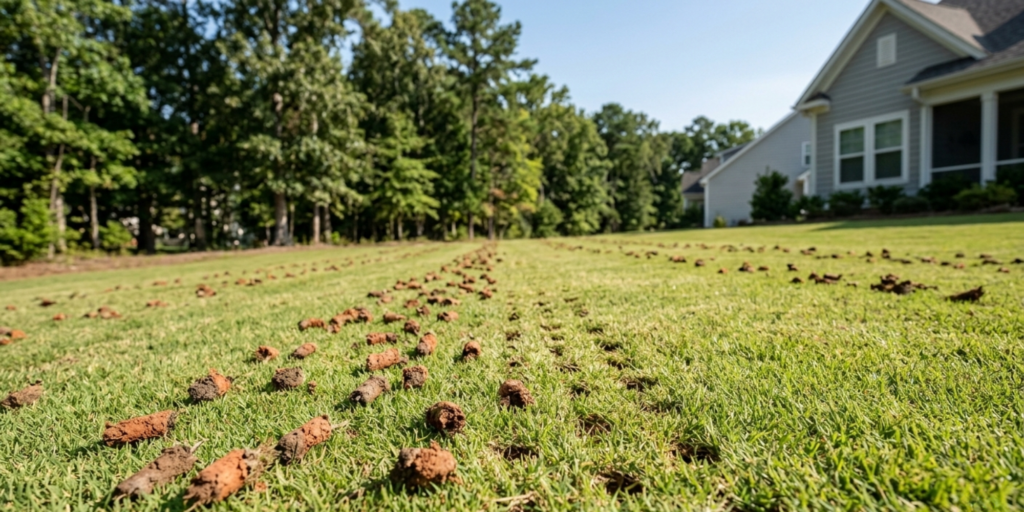
Core aeration, on the other hand, removes small plugs of soil and thatch from your lawn. A core aeration machine extracts thousands of these plugs (usually about the size of a pencil) and leaves them on the surface. Yes, your lawn looks a bit rough for a week or two, but this method is far superior for clay soil. The holes stay open longer, soil structure improves as microbes break down the expelled cores, and you get real, lasting relief from compaction. For Waxhaw lawns, core aeration is the gold standard. JH Landscapes recommends this method specifically because of our local soil conditions.
The small plugs left on the surface will break down naturally within a few weeks, especially if you overseed and keep the lawn watered. Don’t rake them off, that temptation is real, but they’re actually feeding your soil biology as they decompose. This is one of the biggest benefits of core aeration that spike aeration simply cannot deliver.
When to Aerate: Seasonal Timing for Waxhaw Grass Types
Timing is everything when it comes to aeration, and your choice depends entirely on what type of grass covers your lawn. Waxhaw homeowners typically have one of three grasses: tall fescue, bermudagrass, or zoysia. Each thrives in different seasons, and you must aerate during the grass’s peak growing period.
Tall fescue is our cool-season grass, most common in north-facing yards and shaded areas. It grows most actively in fall and spring, when temperatures are moderate. For tall fescue lawns, aerate in early fall, typically September through early October. This timing aligns with the grass’s natural growth surge as heat breaks and moisture becomes more available. Fall aeration also gives you the perfect window to overseed thin areas, letting new seedlings establish strong roots before winter dormancy. A secondary aeration in early spring (March) can also benefit fescue, though fall is typically the priority.
Bermudagrass is warm-season, thriving in full sun and heat. It grows most vigorously from late spring through summer. If your lawn is mostly bermuda, aerate in late spring, usually mid-May through early June. At this point, the grass is actively growing, soil is warming, and you have the entire summer for the lawn to fill in any thin spots created by aeration. Late summer (August) can work too, but avoid early spring when bermuda is just breaking dormancy.
Zoysia is another warm-season option, slightly slower to green up than bermuda but extremely durable in our climate. For zoysia lawns, aerate in late spring (early June) once the grass is fully green and actively growing. This gives zoysia the entire summer to recover and fill in before the growing season ends. Never aerate zoysia in fall, as the grass is heading toward dormancy and won’t recover well.
The common thread: aerate during active growth. Avoid aeration during dormancy (winter for warm-season grasses, summer heat dormancy for cool-season) because your lawn won’t have the energy to recover. In Waxhaw’s humid climate, this timing is even more critical because our heat and weather swings are significant.
What to Do After Aerating: Seeding, Fertilizing, and Care
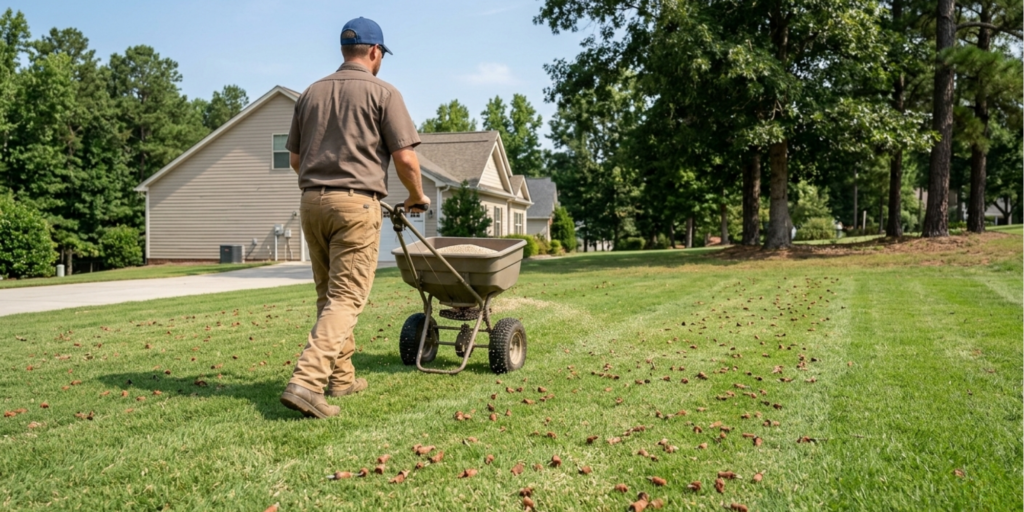
Aeration creates the perfect conditions for improvement, but only if you follow up properly. The week immediately after aeration is your golden opportunity to maximize results.
Start with overseeding. Those holes you’ve created are perfect germination sites for new seed. Choose a seed blend matched to your grass type: tall fescue varieties for shaded areas, bermuda or zoysia for sunny spots. Apply seed directly to the aerated soil, where it will have excellent soil contact. Don’t worry about the plugs on the surface, seed will still reach the soil beneath. Water lightly every day or two for two to three weeks to keep the seedbed moist until seedlings are established. In Waxhaw’s climate, if you aerate in fall, you’ll see germination within 7 to 10 days as temperatures moderate.
Fertilization should follow quickly but not immediately. Wait a few days after aeration, then apply a balanced or slightly nitrogen-rich fertilizer. The aeration holes improve nutrient infiltration dramatically, so your fertilizer will reach deep root zones much more effectively than it would have before. This timing is key: you’re feeding an open, receptive soil structure. A slow-release fertilizer works particularly well because it continues feeding over weeks as those new roots are establishing.
Water consistently for three to four weeks post-aeration. Your lawn’s root system is being disturbed, soil structure is reorganizing, and new seedlings are establishing. Consistent moisture (not waterlogged, just consistently moist) will speed recovery and ensure new grass takes hold. In Waxhaw’s humid summers, you might get rain naturally, but don’t assume it’s enough. Deep watering two to three times weekly is better than relying on occasional storms.
Avoid heavy traffic on your aerated lawn for at least two weeks. Kids, pets, and foot traffic will compress soil in those new holes. Similarly, don’t mow for the first week, and when you do mow, set the blade high. You want to minimize stress on recovering turf. Once new seedlings are established and the lawn has greened in, resume normal mowing and use routines.
How Often Should You Aerate Your Waxhaw Lawn
For most Waxhaw homeowners, aeration should happen once per year, ideally at the seasonal timing we discussed. Annual aeration is standard in our clay-heavy piedmont soils, where compaction returns relatively quickly. If you have high foot traffic, children and pets playing hard, or if your lawn sits on particularly dense clay, you might benefit from twice-annual aeration, particularly if you do one in fall and one in spring for transitional lawns with mixed grass types.
New lawns or recently installed sod typically don’t need aeration for the first year or two. The soil is already been worked and disturbed during installation. But once your lawn is a few years old and traffic has compacted the surface, annual aeration becomes important.
Some premium lawn care programs recommend aeration every two years if conditions are moderate. However, given Waxhaw’s specific challenges, annual aeration is the safer choice. Your lawn will look thicker, healthier, and more resilient. Plus, aeration is best paired with overseeding and fertilizing, so combining these tasks once annually is cost-effective and time-efficient.
Pay attention to your lawn’s signals. If you notice returning compaction, persistent puddles, or thin patches reappearing between aeration cycles, that’s your cue that annual aeration is absolutely necessary. Some lawns in very high-traffic areas might even benefit from late spring aeration (for warm-season grass) paired with a fall aeration a few months later. The key is observing your specific lawn and adjusting accordingly.
Frequently Asked Questions
Can I aerate during winter?
No. Winter is dormancy for both cool-season and warm-season grasses in Waxhaw. Aeration during dormancy severely stresses turf because the grass cannot recover or fill in holes. Wait for active growing season, period.
Does aeration hurt my lawn in the short term?
Yes, honestly. Your lawn will look slightly rough for one to two weeks after core aeration, with visible plugs on the surface. This is completely normal and temporary. The plugs break down naturally, and within three to four weeks, your lawn will look significantly better. The short-term cosmetic impact is absolutely worth the long-term health gains.
What if my lawn is newly seeded or just laid sod?
New installations have already had soil disturbance and initial compaction relief during installation. Wait until the lawn is at least one to two years old before aerating. Once established, follow the seasonal timing for your grass type.
Can I aerate and fertilize on the same day?
Yes, though it’s better to aerate first, then fertilize two to three days later. Aeration breaks up the surface and opens soil structure, making fertilizer more effective when applied after. Doing both the same day is acceptable, just not optimal.
Is spike aeration ever a good choice for Waxhaw lawns?
For our heavy clay soils, core aeration is strongly preferred. Spike aeration can actually worsen compaction in clay. If cost is a concern, save and invest in one quality core aeration per year rather than using cheaper spike aeration.
Your Lawn’s Best Years Are Still Ahead
Waxhaw’s clay soil doesn’t have to be your lawn’s enemy. With the right aeration timing, the correct method, and a solid follow-up routine, even the most compacted piedmont lawn can be transformed into dense, healthy turf that stands up to summer heat, recovers from drought, and stays green through the seasons. Aeration isn’t a one-time fix, it’s a yearly investment in the long-term health of your outdoor space.
Think of each aeration as a reset button for your soil. You’re opening pathways for water, nutrients, and roots to do what they’re designed to do. Combined with overseeding and proper fertilization, annual aeration is one of the highest-return lawn care practices available to Waxhaw homeowners. Your grass will be thicker, your soil biology more active, and your curb appeal noticeably stronger year after year.
About JH Landscapes
JH Landscapes specializes in comprehensive outdoor living solutions with over 15 years of experience serving the Charlotte metro area, including Waxhaw, Fort Mill, and surrounding communities. We provide expert services such as lawn care, landscape design, and outdoor construction projects including covered patios, pergolas, and complete backyard transformations.
Our team of certified professionals combines technical expertise with landscape design knowledge to deliver seamless integration between hardscape elements and natural surroundings. We pride ourselves on using premium materials, professional installation techniques, and thorough project management to ensure every outdoor living space meets our clients’ vision and budget requirements.
Contact JH Landscapes today at (704) 999-0976 to discuss how our lawn care expertise can help you create the perfect aerated, healthy lawn for your Waxhaw home.