
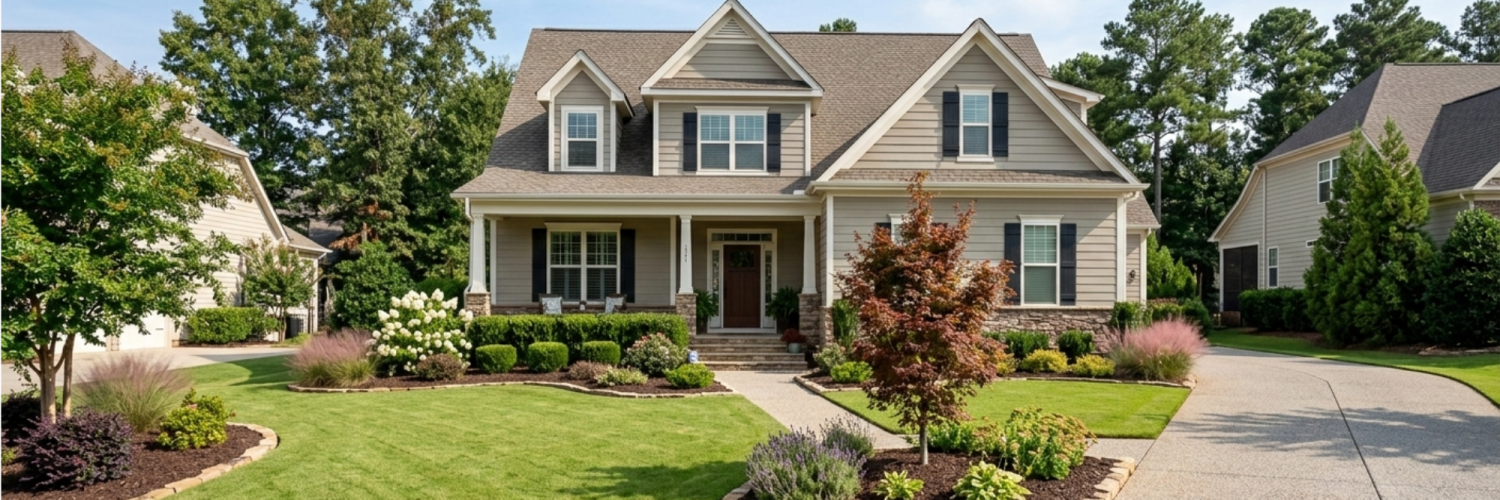
Your front yard is the first impression visitors have of your home. In Waxhaw and the surrounding Charlotte area, where established neighborhoods showcase a mix of traditional and craftsman-style homes, a well-designed front landscape can significantly boost curb appeal and property value. The key is working with what nature gives us in the piedmont region, clay-heavy soil and humid subtropical summers, to create an outdoor space that looks polished year-round.
Front yard landscaping in Waxhaw isn’t just about planting flowers and hoping they survive the heat and moisture. It’s about understanding local growing conditions, selecting plants that thrive in our unique climate, and layering hardscaping elements that add structure and visual interest. Whether you’re looking to refresh an existing landscape or start from scratch, these strategies will help you create a front yard that stands out in your neighborhood.
Understand Your Piedmont Clay Soil and Work With It
The red clay soil common throughout Waxhaw and South Charlotte presents both challenges and opportunities. Clay holds moisture well, which is helpful during our dry summers, but it compacts easily and drains poorly when overworked. Rather than fighting your soil type, successful front yard landscaping embraces it by amending planting beds with compost and organic matter to improve structure and drainage.
Start by testing your soil pH and composition. Most ornamental plants prefer slightly acidic to neutral soil, which is typical for our area. If you’re working with clay that hasn’t been amended, add 3 to 4 inches of quality compost to your planting beds and work it in to the top 8 to 12 inches of existing soil. This improves water infiltration, creates a better root environment, and makes plant establishment much easier. In Waxhaw’s humid climate, good drainage prevents root rot and fungal issues that plague poorly draining landscapes.
Raised beds are another smart solution for clay soil. A 12 to 18-inch raised bed filled with a quality planting mix elevates your front yard aesthetically while solving drainage problems entirely. Stone-edged raised beds also add a polished hardscaping element that complements traditional and modern homes alike. This approach is particularly effective for planting annual colors near entryways or accent beds that define your driveway approach.
Select Native and Adapted Plants for Year-Round Interest
The secret to a low-maintenance front yard that looks great all season is choosing plants adapted to our piedmont climate. Native plants thrive with minimal supplemental water once established and require fewer pest controls because they’re part of the local ecosystem. Eastern Redbud is a standout native tree that brings spring color with its magenta flowers and serves as a focal point for any Waxhaw front yard. It grows 20 to 30 feet tall and works beautifully as a specimen tree or layered with understory plantings.
Oakleaf Hydrangea is another native gem that should be in every front landscape. This elegant shrub offers white flower panicles in summer, burgundy foliage in fall, and persistent seed heads for winter interest. It handles our clay soil with grace and provides textural contrast to softer plantings. Layer it with Muhly Grass, a native ornamental that creates sweeping movements and warm bronze tones in fall. The vertical interest of grasses breaks up heavy foundation plantings and adds movement when the breeze catches them.
For shrub depth and spring color, American Beautyberry deserves a place in your landscape. Its bright magenta berries persist into winter and attract wildlife, while its loose, natural form prevents that stiff, formal look that dated many landscapes from the 1990s and early 2000s. Pair it with evergreen shrubs like hollies and boxwoods to maintain year-round structure. In Waxhaw’s humid climate, these plants resist the fungal and pest pressures that trouble plants better suited to drier regions.
Design Pathways and Functional Hardscaping Elements
A well-designed pathway does more than get people from the driveway to your front door — it creates a sense of intentionality and guides the eye through your front yard. Stone edging, whether used as bed borders or path definition, adds polish without breaking your budget. Mulched pathways lined with stone create visual separation between planting beds and lawn while reducing maintenance. Consider using permeable materials like mulch or gravel paths if you’re concerned about drainage, as these integrate well with the clay-heavy terrain of Waxhaw.
Retaining walls are functional hardscaping elements that solve multiple problems at once. If your front yard slopes, a retaining wall creates level planting areas, prevents erosion, and adds architectural interest. Stone retaining walls, whether stacked natural stone or mortared brick, complement traditional homes throughout South Charlotte and Waxhaw. These walls become even more valuable when you plant them with cascading perennials and shrubs that soften the hard lines and integrate the feature into your overall landscape design.
Consider adding a focal point near your entry, such as a small seating area, garden feature, or artistic element. In Waxhaw’s established neighborhoods, front porches and entry arbors are common, and a simple hardscaping feature like a stone planter cluster or bench creates visual interest and invites people to approach. Outdoor lighting along pathways and uplighting on trees add both safety and evening ambiance, transforming your front yard into a welcoming space year-round.
Layer Plants for Depth and Seasonal Impact
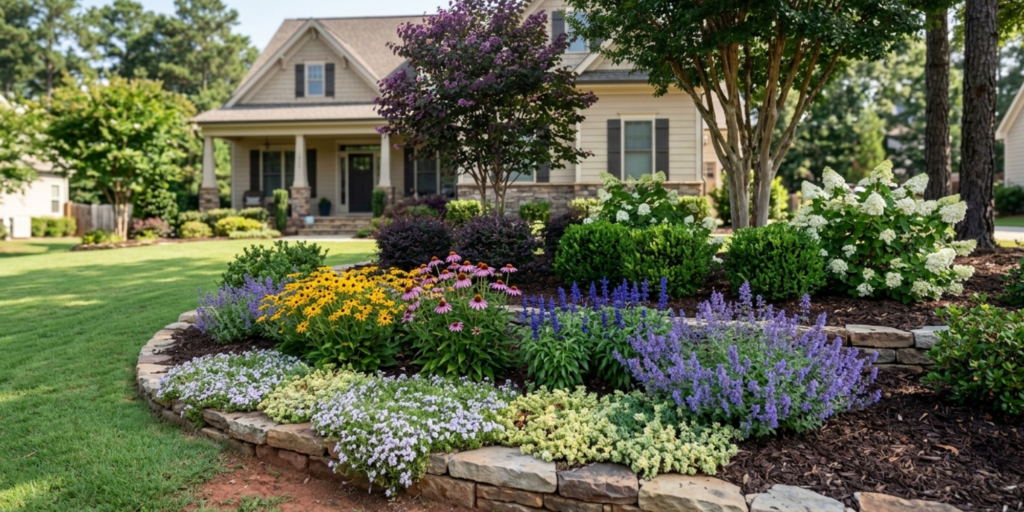
Creating visual depth in your front yard requires thinking in layers: canopy trees, understory shrubs, perennials, and groundcovers. Start with one or two focal trees like a dogwood, redbud, or crape myrtle to establish height and structure. These trees define the space and provide scale. Beneath them, plant shrubs of varying heights to create a tiered effect. In Waxhaw, consider grouping plants in odd numbers (threes, fives) rather than single specimens for a more natural, sophisticated appearance.
Seasonal color keeps your front yard interesting all year. Spring bulbs like daffodils and tulips work well in front beds and transition beautifully as perennials take over for summer. Choose perennials that bloom at different times: salvias and catmint for early summer, coneflowers and black-eyed Susans for peak summer, and asters and sedum for fall. This staggered bloom time means something is always in flower, and your landscape evolves from month to month.
Groundcovers and low-growing perennials tie everything together and reduce the expanse of mulch that can make even well-planted yards look sparse. Creeping phlox, creeping Jenny, and low-growing sedums work well in filtered sunlight or full sun, depending on your exposure. In Waxhaw’s humid climate, ensure good air circulation around groundcovers to prevent fungal issues. Strategic placement of these lower layers prevents weeds, reduces maintenance, and creates a polished, intentional look.
Add Hardscaping Touches for Structure and Visual Appeal
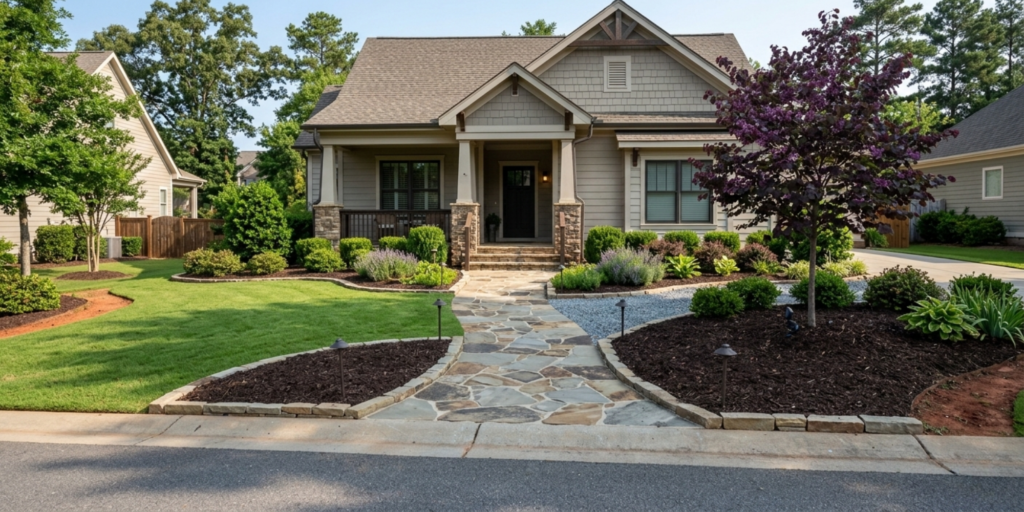
Hardscaping — the non-living elements of your landscape — provides the bones that make everything else work. Beyond pathways and retaining walls, consider what materials and colors complement your home’s architecture. A traditional craftsman home in Waxhaw looks best with natural stone edging and warm-toned mulch or gravel. A contemporary home works with clean lines, steel edging, and modern plantings. Align your hardscaping choices with your home’s style for a cohesive appearance.
Outdoor lighting deserves special attention. Path lights, uplighting on focal trees, and accent lighting on architectural features transform your front yard after dark. Lighting extends the usability of your front entry and adds security by illuminating potential tripping hazards. LED lighting is energy-efficient and comes in warm color temperatures that feel welcoming. Waxhaw’s wooded neighborhoods benefit from thoughtful lighting that respects neighbors while enhancing your home’s evening presence.
Stone edging and borders are relatively inexpensive but make a dramatic difference in landscape appearance. Neat, well-defined bed edges prevent grass encroachment and create a manicured look even if your plant selections are loose and natural. Flagstone or similar materials can define patio areas near entryways, tying indoor and outdoor spaces together. These details separate a finished, professional landscape from one that looks like plants were just dropped in place.
Create Year-Round Color and Interest in a Challenging Climate
Waxhaw’s hot, humid summers and mild winters present unique opportunities for seasonal interest. Focus on spring color from bulbs and native flowering trees. Summer relies on reliable bloomers like coneflowers, daylilies, and salvias that handle heat and humidity without supplemental water once established. Fall foliage from native trees and shrubs, along with ornamental grasses in bronze and copper tones, extends your landscape’s appeal into November and December.
Winter interest comes from evergreen foliage, persistent berries, and interesting branch structure. American Beautyberry’s magenta berries are stunning against a layer of snow, rare as it is in Waxhaw. Evergreen hollies, boxwoods, and conifers maintain visual weight and color when deciduous plants go dormant. Ornamental grasses like Muhly retain their form and color well into winter, providing texture and movement even in the coldest months. By planning for all four seasons, your front yard remains attractive year-round rather than peaking for a few weeks in spring.
Frequently Asked Questions
What plants grow best in Waxhaw’s clay soil?
Native plants and well-adapted ornamentals thrive in piedmont clay. Eastern Redbud, Oakleaf Hydrangea, American Beautyberry, hollies, boxwoods, and ornamental grasses like Muhly are excellent choices. The key is amending planting beds with compost and organic matter to improve drainage, then selecting plants suited to your light conditions. Once established, these plants need minimal supplemental water and care.
How can I improve drainage in my front yard?
Start by amending planting beds with 3 to 4 inches of quality compost worked into the top 8 to 12 inches of existing soil. For persistent drainage problems, raised beds are an excellent solution that also adds visual interest and hardscaping appeal. Ensure mulched beds are sloped slightly away from your home’s foundation, and avoid creating low spots where water accumulates. If standing water is a major issue, you may need to consult with a drainage specialist or consider French drains.
What’s the best way to define my front yard with hardscaping?
Stone edging creates clean lines between planting beds and lawn while looking polished and intentional. Pathways guide visitors to your entry and add structural definition. Retaining walls solve erosion problems while adding height and interest. Consider your home’s architectural style when choosing materials and colors, and group hardscaping elements to create focal points rather than scattering them throughout the landscape design.
How do I create a front yard that looks good year-round?
Layer plants for seasonal interest, combining spring bulbs and flowering trees, summer bloomers, fall foliage and grasses, and winter evergreens and berries. Include a mix of perennials that bloom at different times, and don’t overlook structural elements like ornamental grasses and evergreen shrubs that provide visual interest when flowers fade. Native plants adapted to Waxhaw’s climate naturally cycle through seasonal changes with minimal intervention.
Should I use mulch or groundcovers in my planting beds?
A combination works best. Groundcovers and low-growing perennials add sophistication and reduce weeds, while mulch protects soil and moderates moisture. Use mulch in beds with larger shrubs and trees, and fill lower layers with groundcovers and creeping perennials. This approach reduces maintenance, prevents weeds, and creates a polished, finished appearance. Ensure mulch is pulled back a few inches from plant stems to prevent rot in Waxhaw’s humid climate.
Your Waxhaw Curb Appeal Starts Here
A beautiful front yard in Waxhaw is well within reach when you understand the tools at your disposal: the right plants, smart hardscaping, and a landscape design that works with the piedmont climate rather than against it. By layering native and adapted plants, defining spaces with stone edging and pathways, and planning for four seasons of interest, you can transform even the most basic lawn into a landscape that genuinely enhances your home’s character and value.
The journey from overgrown or unremarkable to polished and intentional doesn’t require a complete overhaul. Start with one section — a defined planting bed near the entry, a stone pathway, or a focal tree — and build outward from there. Over time, these individual elements come together into a cohesive landscape that reflects the pride you take in your home and creates a welcoming first impression for everyone who visits.
About JH Landscapes
JH Landscapes specializes in comprehensive outdoor living solutions with over 15 years of experience serving the Charlotte metro area, including Waxhaw, Fort Mill, and surrounding communities. We provide expert services such as landscape design, lawn care, and outdoor construction projects including covered patios, pergolas, and complete front yard transformations.
Our team of certified professionals combines technical expertise with landscape design knowledge to deliver seamless integration between hardscape elements and natural surroundings. We pride ourselves on using premium materials, professional installation techniques, and thorough project management to ensure every outdoor space meets our clients’ vision.
Contact JH Landscapes today at (704) 999-0976 to discuss your front yard landscaping project in Waxhaw.