
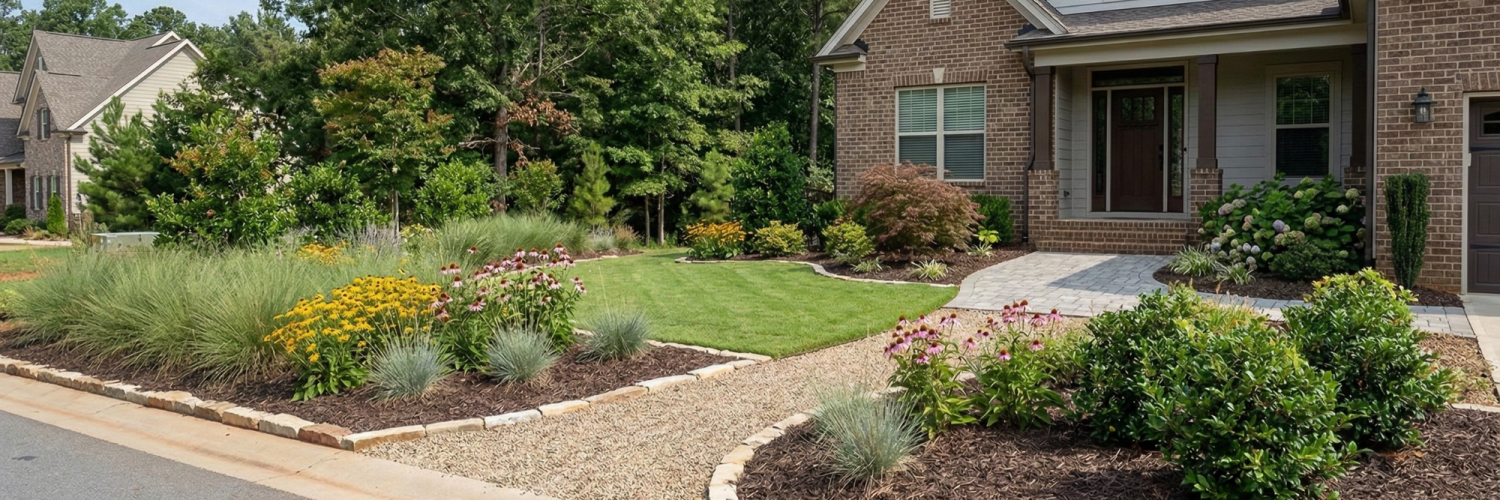
When most people hear the word xeriscaping, they picture a dry desert yard filled with rocks and cactus. That image has nothing to do with what xeriscaping actually means in a place like Waxhaw, NC. In the Piedmont region of North Carolina, xeriscaping is about designing a landscape that thrives with less water, less maintenance, and less waste, while still looking lush, beautiful, and suited to the Charlotte area climate.
Waxhaw receives around 44 inches of rainfall per year, which sounds like plenty, but the region also experiences periodic summer dry spells that stress lawns and landscapes heavily. Combine that with the dense clay soils common throughout Union County, which shed water during heavy rains and bake hard during dry stretches, and you have conditions where water-smart landscaping genuinely makes a difference. Xeriscaping does not mean a dead or minimal yard. It means a yard designed to perform well with the moisture it gets, rather than one that constantly needs supplemental irrigation to survive.
Homeowners across Waxhaw, Matthews, Indian Trail, and the broader Charlotte suburbs are increasingly interested in xeriscaping as water rates rise and weather patterns become less predictable. Whether you want to reduce your irrigation bill, spend less time dragging a hose around the yard, or simply create a landscape that looks good even during a dry August, water-smart design principles can get you there.
Understanding the Core Principles of Xeriscaping
Xeriscaping is not a single design style. It is a collection of principles that work together to create an efficient, beautiful landscape. The foundation is putting the right plant in the right place. A plant that is well-suited to your specific soil, sun exposure, and typical rainfall conditions will outperform a high-maintenance exotic species that requires constant supplemental water and care. In Waxhaw’s piedmont climate, that means prioritizing native and adapted plants over species that evolved in cooler, wetter, or drier climates.
Soil improvement is another core principle that matters especially in Waxhaw. Clay-heavy soils hold some moisture but can become compacted and resist infiltration during heavy rains. Amending your soil with compost before planting improves its structure, allowing roots to penetrate more deeply and access the moisture that does exist underground. Deep-rooted plants access soil moisture far more efficiently than shallow-rooted ones, making soil preparation an investment that pays off over years.
Grouping plants with similar water needs together, known as hydrozoning, is another pillar of xeriscaping. When you plant drought-tolerant specimens next to thirsty ornamentals, you end up overwatering one or underwatering the other. Thoughtful plant groupings make irrigation more targeted and efficient, and they make your irrigation system easier to program correctly.
Choosing the Right Plants for Water-Smart Landscapes in Waxhaw
Plant selection is where xeriscaping in Waxhaw, NC becomes both practical and creative. The goal is not to limit your plant palette but to expand it toward species that perform exceptionally well in our climate without heavy supplemental watering once established. Native plants are the natural starting point because they evolved here and are already adapted to our rainfall patterns, soil types, and seasonal temperatures.
For lawns, zoysia grass is one of the most water-efficient warm-season options available in the Waxhaw area. It goes dormant in winter, turns a tan color, and bounces back vigorously in spring. During summer, established zoysia needs far less irrigation than tall fescue and handles the heat and humidity of piedmont summers with minimal stress. Bermudagrass is another drought-tolerant warm-season option for sunny areas.
In planted beds and borders, ornamental grasses like Muhly Grass, Switchgrass, and Little Bluestem are outstanding choices. These native grasses are drought-tolerant once established, provide multi-season interest, and require almost no supplemental watering after their first year. Flowering perennials like Black-eyed Susan, Purple Coneflower, and Rudbeckia are similarly low-maintenance and thrive in Waxhaw’s conditions. For shrubs, native species like Inkberry Holly, Beautyberry, Virginia Sweetspire, and Buttonbush provide structure, seasonal color, and habitat value without demanding regular irrigation.
Mulching: One of the Most Effective Water-Saving Tools
Mulch does more work in a xeriscape than almost any other single element. A properly applied layer of mulch, typically two to three inches deep, reduces soil moisture evaporation dramatically, keeping the root zone cooler and wetter between rain events. In a Waxhaw summer, where temperatures regularly climb into the 90s and the sun beats down on unprotected soil, mulch can mean the difference between a plant thriving and a plant struggling.
Mulch also moderates soil temperature, which reduces heat stress on plant roots during peak summer. It suppresses weed competition, which means less time pulling and less competition for soil moisture. And as organic mulches break down over time, they improve the structure of Waxhaw’s clay soils, gradually increasing their water infiltration rate and their ability to support deep root systems.
Pine bark nuggets, shredded hardwood mulch, and pine straw all perform well in Waxhaw’s climate. Pine straw is particularly popular in the piedmont region because it is lightweight, drains well, and does not compact as heavily as some bark mulches. Whichever material you choose, keeping mulch pulled back a few inches from plant stems and tree trunks helps prevent rot and pest issues at the crown.
Efficient Irrigation: Water Smarter, Not More
Even in a xeriscape, some supplemental irrigation is often needed during establishment periods and extended dry spells. The difference is that xeriscaping prioritizes efficient delivery over brute-force watering. Drip irrigation systems that deliver water directly to the root zone are far more effective than overhead sprinklers, which lose a significant percentage of their water to evaporation before it ever reaches the soil.
For lawn areas, smart irrigation controllers that adjust run times based on weather data and soil moisture sensors eliminate guesswork and prevent the common problem of watering after a rain event. In Waxhaw, where summer afternoons frequently bring thunderstorms that deliver an inch of rain in 30 minutes, an irrigation system that keeps running on schedule regardless of weather wastes water and stresses your lawn.
Watering deeply and infrequently encourages roots to grow downward in search of moisture, which builds drought tolerance naturally. Short, frequent watering cycles create shallow root systems that dry out quickly and depend on irrigation to survive. Training your lawn and landscape to be water-independent through deep, infrequent watering is one of the most effective long-term strategies in xeriscaping.
Hardscaping and Design Choices That Reduce Water Demand
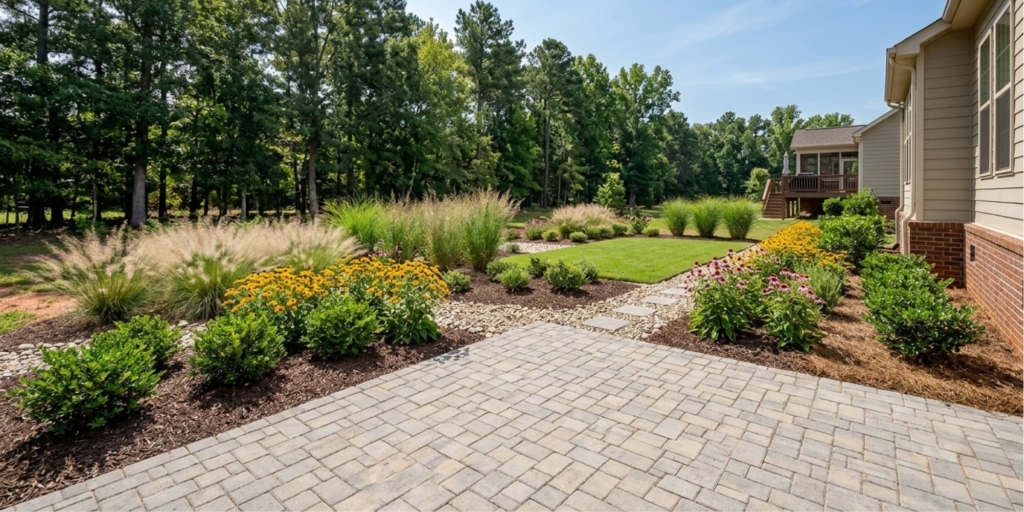
Hardscaping is an often-overlooked element of xeriscaping, but the ratio of planted area to paved or structured area has a significant impact on how much water a landscape requires. Patios, walkways, decorative gravel beds, and other hardscape features reduce the total square footage of planted area that needs watering. In Waxhaw, where many properties have generous outdoor space, a well-designed patio or outdoor living area can replace a section of high-maintenance lawn while actually increasing the usability of your yard.
Permeable paving options like decomposed granite, gravel, or permeable pavers allow rainwater to infiltrate rather than running off, which helps recharge groundwater and reduces erosion. In areas where runoff from driveways or paved surfaces causes drainage problems, incorporating permeable materials or directing runoff toward planted areas rather than storm drains aligns with the principles of water-smart design.
Reducing lawn area overall is another powerful xeriscape strategy. Turf requires more water per square foot than most ornamental plantings, especially during summer. Replacing sections of lawn with planted beds, groundcovers, or hardscape not only reduces water demand but often reduces mowing and maintenance requirements at the same time. Native groundcovers like Liriope, Creeping Phlox, or Mondo Grass can cover large areas with minimal care and zero supplemental water once established.
Frequently Asked Questions
Does xeriscaping work in a humid climate like Waxhaw, NC?
Xeriscaping works well in Waxhaw and throughout the Charlotte area. While the name is associated with dry climates, the principles of efficient water use, appropriate plant selection, and soil improvement apply everywhere. In Waxhaw’s humid subtropical climate, xeriscaping primarily means reducing unnecessary irrigation, choosing plants suited to periodic summer drought, and designing a landscape that does not rely on constant watering to stay healthy.
What are the best drought-tolerant plants for Waxhaw yards?
Good drought-tolerant choices for Waxhaw include zoysia grass, Muhly Grass, Black-eyed Susan, Purple Coneflower, Beautyberry, Inkberry Holly, Virginia Sweetspire, Switchgrass, Little Bluestem, and native ornamental trees like Eastern Redbud and Serviceberry. These plants are either native to the piedmont region or well-adapted to its clay soils, rainfall patterns, and summer heat.
Will a xeriscape look good year-round?
A well-designed xeriscape can provide interest across every season. Spring-flowering natives like Eastern Redbud and Carolina Jessamine provide early color. Summer bloomers like Black-eyed Susan and Coneflower carry through the heat. Fall brings ornamental grasses, Beautyberry berries, and fall foliage. Evergreen shrubs and groundcovers maintain structure through winter. The key is thoughtful plant selection that staggers peak interest across the year.
How much can xeriscaping reduce my water bill?
The reduction varies depending on how much of your landscape currently relies on supplemental irrigation, but homeowners who convert high-water-demand lawns and plantings to water-smart designs often see significant decreases in outdoor water use. Replacing sections of turf with native plantings, adding drip irrigation, and installing a smart controller typically produces noticeable savings during summer months when outdoor watering accounts for the largest share of residential water use.
Do I need to remove all my grass to xeriscape my yard?
No. Xeriscaping does not require removing all your grass. Many homeowners in Waxhaw incorporate xeriscaping principles by converting specific areas of their yard, such as slopes, shaded spots, or areas far from hose access, while maintaining lawn in the areas where they use it most. A partial conversion can meaningfully reduce your overall water use and maintenance burden without eliminating the lawn entirely.
About JH Landscapes
JH Landscapes helps homeowners throughout Waxhaw, Matthews, Indian Trail, Marvin, Monroe, and the greater Charlotte area create beautiful, water-smart landscapes tailored to the piedmont climate. Whether you want to replace a struggling lawn section with native plantings, upgrade to a drip irrigation system, or redesign your yard from the ground up with xeriscaping principles, our team has the experience to make it happen. Contact JH Landscapes to schedule your consultation, or call us directly at (704) 999-0976. We look forward to helping you build a landscape that looks great and works smarter.