
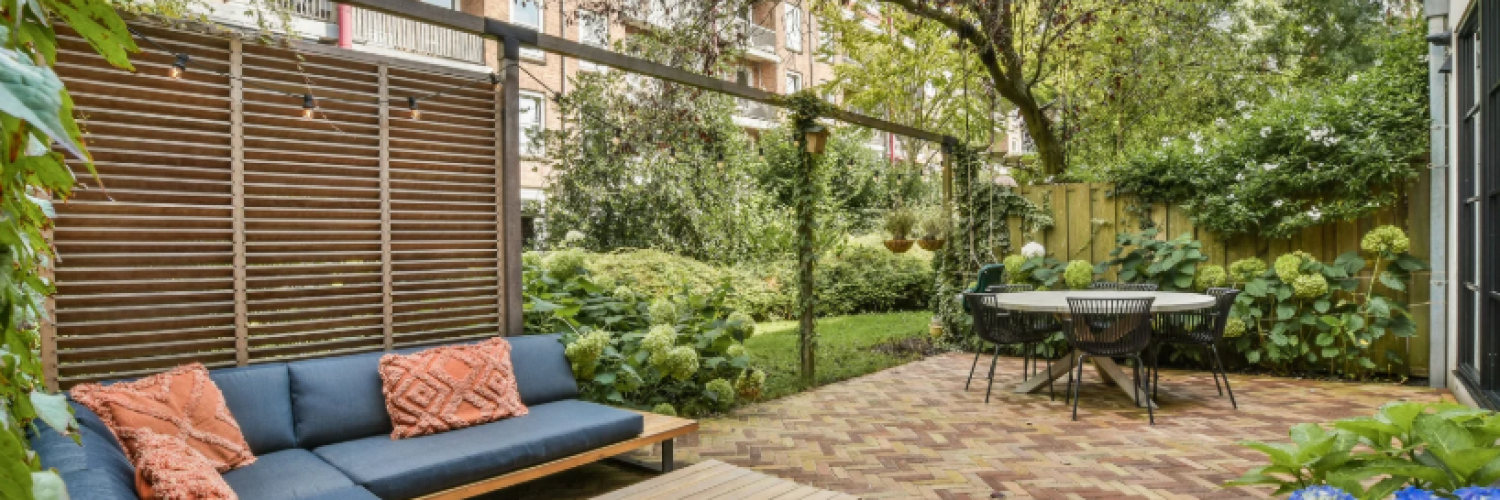
A paver patio can turn a plain backyard into a genuine outdoor living space, and for homeowners across the Charlotte area, it is one of the most rewarding upgrades you can make to your property. Whether you are envisioning a sprawling multi-level entertaining area or a simple, clean surface for a few chairs and a grill, the right patio installation starts with understanding your material options, design possibilities, and how Charlotte’s specific climate shapes the decisions you make.
This guide covers popular paver patio ideas suited to Charlotte-area homes, the materials that perform best in the Piedmont’s heat and clay-heavy soil, and how pairing your patio with complementary outdoor features can create a backyard you actually use year-round.
Why Paver Patios Are a Smart Choice in Charlotte
Charlotte’s climate creates real challenges for outdoor surfaces. Summers are hot and humid, afternoon thunderstorms roll through frequently from May into September, and while winters are generally mild, the region still experiences enough freeze-thaw cycles to stress materials that lack flexibility. Add to that the red clay soil common throughout the Piedmont, which retains moisture and shifts as it wets and dries across seasons, and you have conditions that are particularly hard on poured concrete.
Pavers handle these conditions far better. Because they are individual interlocking units set on a compacted gravel and sand base, they flex slightly with ground movement rather than cracking straight through. When a paver does crack or settle unevenly, you replace only that piece rather than the entire surface. That repairability alone makes pavers a smarter long-term investment than a monolithic concrete slab for most Charlotte homeowners.
Beyond durability, pavers offer something poured concrete cannot match: genuine design flexibility. With dozens of shapes, colors, textures, and materials available, a paver patio can look traditional, contemporary, or anywhere in between. Professionally installed paver patios also consistently rank among the top outdoor improvements for return on investment, adding usable square footage and meaningful curb appeal to any property.
Paver Material Options for Charlotte Homes
Choosing the right paver material is the single most consequential decision in the design process. Each type brings different visual characteristics, performance qualities, and price points. The four most commonly installed options in the Charlotte area are concrete pavers, brick and clay pavers, natural stone, and porcelain pavers.
Concrete Pavers
Concrete pavers are the most popular choice for Charlotte homeowners. They are manufactured in an enormous range of shapes, profiles, and colors, and modern production techniques allow them to closely mimic the appearance of natural stone or aged brick at a fraction of the cost. They are dense enough to handle Charlotte’s summer heat without significant expansion, and lighter-colored options stay noticeably cooler underfoot than darker alternatives on sunny afternoons. Installed costs typically range from $8 to $15 per square foot, making them the most accessible entry point into paver patio construction.
Brick and Clay Pavers
Clay brick pavers bring a warmth and classic character that complements the traditional and transitional home styles common across South Charlotte, Waxhaw, and Weddington. Fired at high temperatures, brick pavers are extremely dense and develop a natural patina over time that many homeowners find more appealing as the years pass. They handle Charlotte’s occasional winter freeze well when the base is properly installed, and they are one of the most durable options available, with installed costs generally falling between $10 and $20 per square foot.
Natural Stone
Travertine, bluestone, and limestone represent the high end of the paver spectrum. Each piece is unique, and the natural variation in tone and texture produces a result that manufactured products simply cannot replicate. Travertine, with its warm cream and tan tones, performs well in Charlotte’s heat and suits homes with a Mediterranean or transitional aesthetic.
Bluestone offers a cooler gray-blue palette that works well with Craftsman and contemporary styles. Natural stone requires periodic sealing to prevent staining, but with basic upkeep it will outlast nearly any other option, with installed costs typically between $15 and $30 per square foot depending on the material and layout complexity.
Porcelain Pavers
Porcelain pavers have grown significantly in popularity over the past several years, particularly for outdoor kitchens and pool surrounds. Fired at extremely high temperatures, they are nearly impervious to staining, fading, and moisture absorption. Many porcelain options mimic wood planks or large-format stone slabs, lending a modern architectural feel to an outdoor space. They are among the lowest-maintenance paver options available, though they require professional cutting equipment and precise installation, with costs generally running $12 to $25 per square foot.
Paver Patio Design Ideas and Layout Patterns
Once you settle on a material, the design phase is where a patio truly takes shape. Layout pattern, patio size, elevation changes, and how the space connects to the house all factor into the final result. Some of the most effective approaches for Charlotte-area homes are worth understanding before you commit to a direction.
A running bond pattern places pavers offset by half a unit in alternating rows, similar to traditional bricklaying. It is clean and classic, works with nearly any home style, and is one of the most structurally sound options because the staggered joints resist spreading under foot traffic. For homeowners who want a low-profile, timeless look, running bond is a reliable starting point.
Herringbone sets pavers at 45- or 90-degree angles in a V-shaped pattern. It is exceptionally stable for high-traffic areas because the angled joints interlock tightly, reducing the likelihood of individual pavers shifting over time. Herringbone also creates strong visual movement that makes even a modest patio feel more purposeful and dynamic.
Basketweave alternates pairs of pavers horizontally and vertically to create a woven visual effect. This pattern adds character without requiring unusual cuts and complements cottage, farmhouse, and traditional architectural styles particularly well. It is a strong choice for homeowners who want something more interesting than a basic grid without committing to the complexity of a herringbone layout.
Random or irregular flagstone layouts use natural stone pieces split into irregular shapes and fitted together like a puzzle. This approach suits organic, garden-style designs and looks especially striking when bordered by planted beds or low ground cover. No two irregular flagstone patios look exactly alike, which is part of their appeal.
Multi-level patios incorporate two or more distinct surfaces at different elevations, connected by steps. These designs work particularly well on sloped lots common throughout the Charlotte area and allow you to define separate zones for dining, lounging, and cooking without the spaces feeling crowded or undefined. Paired with retaining features, a multi-level patio can transform a challenging grade into one of the most distinctive elements of the backyard.
Mixing materials is another approach gaining ground in Charlotte patios. A concrete paver field with a natural stone border, or a travertine patio with a contrasting inlay strip, adds visual depth without dramatically increasing cost. Your landscape design plan should account for how the patio connects visually to the rest of the yard, including planting beds, lawn areas, and any additional hardscape elements.
Pairing Your Paver Patio with Other Outdoor Features
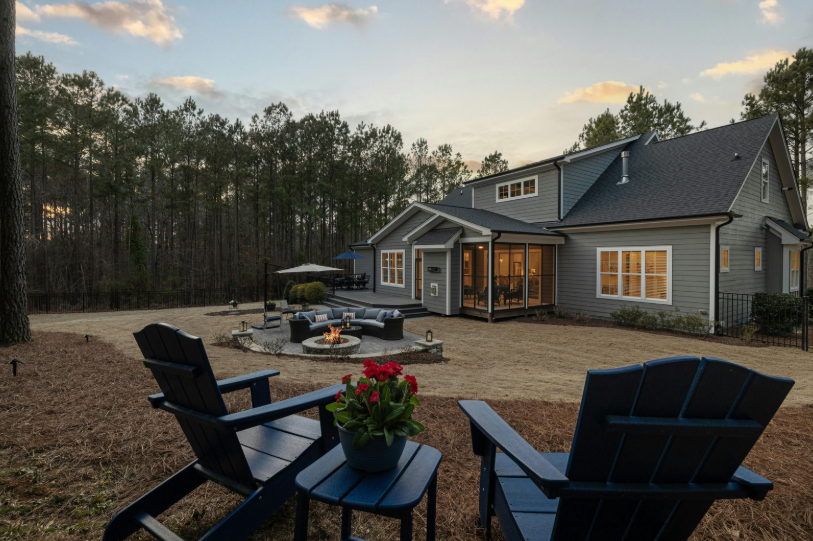
A paver patio is rarely just a patio. The surface itself is the foundation, and what you incorporate around it determines how the space actually gets used. Charlotte homeowners increasingly treat their backyards as true extensions of their interior living areas, and the right combination of features makes that possible.
Seating walls along one or more edges of the patio serve double duty. They define the perimeter of the space, provide additional seating for gatherings without requiring extra furniture, and on sloped lots help manage grade transitions with a finished, intentional look. Built from matching or complementary paver material, they tie the overall design together rather than feeling like a separate decision.
A built-in fire pit anchors the patio as a destination, especially during Charlotte’s fall and early spring when evenings cool off quickly. Fire pits integrated into the patio design with a stone or concrete cap feel more permanent and polished than freestanding metal options, and they create a natural gathering point that encourages people to stay outside longer.
An outdoor kitchen takes entertainment to a different level entirely. Charlotte’s long warm season makes alfresco cooking practical for the better part of the year, and a well-designed outdoor kitchen with a built-in grill, counter space, and storage eliminates the constant back-and-forth trips inside during cookouts. Pavers make an ideal base surface around outdoor kitchens because of their heat resistance and ease of cleaning after spills.
Properly planned outdoor lighting extends the usable hours of the patio well after dark and adds a safety element along steps and grade transitions. Low-voltage LED systems integrated into seating wall caps, stair risers, or post bases create a layered, designed effect rather than a purely functional one, and they are energy-efficient enough to run without meaningfully affecting the utility bill.
A water feature near or adjacent to the patio adds ambient sound and visual interest that can transform the character of the space entirely. A spillover fountain or bubbling urn can make even a modest-sized patio feel more private and relaxing, which is particularly valuable in neighborhoods where lots sit in close proximity to one another.
What to Expect During Paver Patio Installation
Understanding the installation process helps set realistic expectations and underscores why professional installation matters so much. A paver patio is only as good as what lies beneath it.
Base preparation is the most critical phase, especially in the Charlotte area. Because the region’s clay-heavy soil retains moisture and shifts as it wets and dries through the seasons, installers need to excavate several inches of native soil and replace it with compacted gravel before the sand setting bed goes down. Skipping or shortcutting this step is the primary reason paver patios fail prematurely. The team at JH Landscapes approaches every hardscaping services project with proper base construction as the non-negotiable starting point.
The patio surface must also be graded to slope slightly away from the house, typically around one-quarter inch per foot. This ensures rainwater, which falls in significant volumes during Charlotte summers, drains away from the foundation rather than pooling on or near the structure.
Once the base is compacted, pavers are laid according to the chosen pattern, cut as needed at the edges, and then compacted with a plate compactor to seat them firmly into the sand bed. Polymeric sand is swept into the joints and activated with water to lock everything in place and inhibit weed growth. A standard residential paver patio typically takes three to seven business days from start to finish, though larger projects incorporating multiple features can extend beyond that window.
Sealing the patio surface within a few weeks of installation helps protect the pavers from staining and enhances color depth. In Charlotte’s climate, most installers recommend resealing every three to five years depending on the material and the level of use the patio sees.
About JH Landscapes
JH Landscapes is a full-service outdoor construction and landscaping company serving residential and commercial properties throughout the Greater Charlotte area, including Waxhaw, Matthews, Ballantyne, Weddington, Fort Mill, and surrounding communities. The team specializes in paver patios, hardscaping, landscape construction, and outdoor living features, approaching every project with meticulous planning and skilled execution. From initial design through final installation, JH Landscapes is committed to creating outdoor spaces that perform reliably, hold up to the Piedmont climate, and reflect the character of each property.
Ready to Build Your Paver Patio?
If you are ready to put a paver patio to work in your backyard, JH Landscapes serves homeowners throughout Waxhaw, Matthews, Ballantyne, Weddington, Fort Mill, and the surrounding Greater Charlotte region. Call (704) 999-0976 or visit our contact page to schedule your consultation. We will evaluate your property, walk through your design options, and provide a detailed project proposal so you know exactly what to expect before any work begins.
Frequently Asked Questions
What is the best paver material for a Charlotte-area patio?
Concrete pavers are the most versatile and budget-friendly option for most Charlotte homeowners. For a more upscale look, travertine and bluestone natural stone both perform well in the Piedmont climate. The best choice depends on your design goals, budget, and how the patio will be used day to day.
How long does a paver patio last?
A properly installed paver patio with an adequate compacted base can last 25 to 50 years or more. Individual pavers can be replaced if they crack or settle unevenly, which makes the system far more repairable over its lifetime than a poured concrete slab.
Do I need a permit to install a paver patio in Charlotte?
Standard ground-level paver patios typically do not require a building permit in most Charlotte-area municipalities. If the project includes a covered structure, an outdoor kitchen with gas or electrical connections, or substantially increases impervious surface, permits may apply. JH Landscapes coordinates with local building departments as needed throughout the process.
How do I keep weeds from growing between my pavers?
Polymeric sand filled into the joints during installation significantly reduces weed germination by bonding into a firm, semi-rigid barrier when activated with water. Keeping the joints topped up and resealing the surface every few years maintains that barrier. A small amount of weed growth in older joints is normal and easily managed with targeted spot treatments.
What does a paver patio cost in the Charlotte area?
Costs vary based on patio size, material selection, site conditions, and any additional features. Concrete pavers generally start around $8 to $15 per square foot installed, while natural stone installations typically range from $15 to $30 per square foot. Additions like seating walls, fire pits, and outdoor kitchens are scoped and priced separately based on the specifics of each project.
Can a paver patio be installed in winter in Charlotte?
Charlotte’s mild winters make paver installation possible for much of the cooler season. Base compaction and paver laying can typically proceed as long as the ground is not frozen. Some finishing steps, such as sealing, require above-freezing temperatures to cure properly. JH Landscapes schedules projects strategically throughout the year and communicates any weather-related timing considerations during the planning phase.