
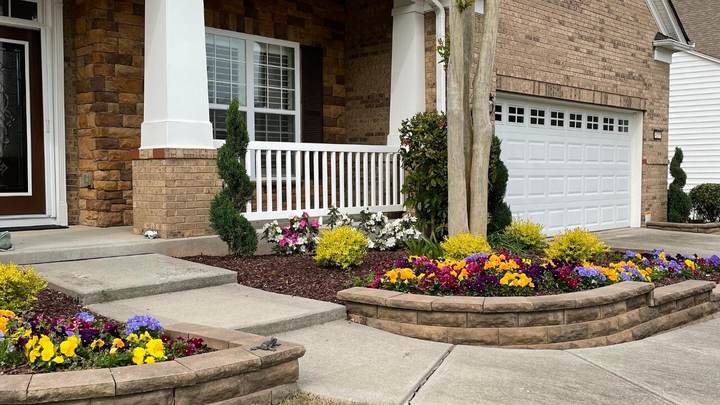
You closed on a new home, the yard looked green and tidy, and the builder handed you the keys. Then the second summer arrived. The sod thinned out, bare patches spread, water sheeted across the lawn after every storm, and the handful of shrubs by the front porch started to look sad. If that sounds familiar, you are in good company. Builder-grade landscaping in Matthews NC follows a predictable pattern, and once you understand why it fails, the fix makes a lot more sense.
We work in newer Matthews subdivisions all the time, especially in the areas closer to the Union County line. This guide explains what happens to a yard during construction, the warning signs to watch for, and the steps we take to turn a builder-grade lot into a yard that actually holds up.
Tired of patching the same thin lawn every spring? Call (704) 999-0976 and our team will walk your Matthews yard and explain what it really needs.
Key Takeaways
- During construction, topsoil is often stripped and heavy equipment compacts the red clay subsoil underneath.
- Sod laid on compacted clay looks finished for a season, then thins because roots cannot penetrate.
- Reseeding alone rarely fixes the problem. The root zone has to be rebuilt.
- Grade correction should happen before any new turf or plants go down so water moves away from the house.
- A builder-grade yard is also a blank canvas for patios, beds, and outdoor living space.
What Happens to a Yard During Construction
Most newer Matthews homes get the same minimal treatment. During site work, the topsoil is stripped. Excavators, trucks, and skid steers then run back and forth over the lot for months, pressing the Cecil and Pacolet series clay into a dense, hard layer. When the house is done, a thin layer of sod gets rolled onto whatever is left, a few shrubs go in near the foundation, and the yard is called finished.
It looks good on closing day. The problem is underneath. Compacted red clay sheds water instead of absorbing it, and new roots have nowhere to go. The sod survives on surface moisture and whatever nutrients came with it, and once that runs out, the lawn starts to decline.
Signs Your Matthews Yard Is Builder-Grade
- Turf thins after the first year. The lawn looked full at move in, but bare patches spread each summer.
- Water sheets across the surface. Instead of soaking in, rain runs off toward the street, the neighbor's yard, or worse, your foundation.
- Shovels hit a wall. Digging a planting hole feels like chipping through brick a few inches down.
- Standing water in low spots. Puddles linger long after a storm because the clay cannot drain.
- Nothing defines the backyard. There is a rectangle of grass, a small concrete pad, and no real place to sit, cook, or gather.
- Foundation shrubs struggle. Plants were set into unamended clay and never established.
Why Reseeding Alone Does Not Work
The most common reaction to a thinning lawn is to throw down seed and fertilizer. In a builder-grade yard, that usually buys a few months at most. Seed that germinates on top of compacted clay hits the same wall the original sod did. Roots stay shallow, the lawn dries out fast in July, and the cycle repeats.
Correcting a builder-grade yard means rebuilding the root zone, not repeatedly patching the surface. That is the core of how we approach landscaping in Matthews when a homeowner calls us about a yard that never took.
How We Rebuild a Builder-Grade Yard
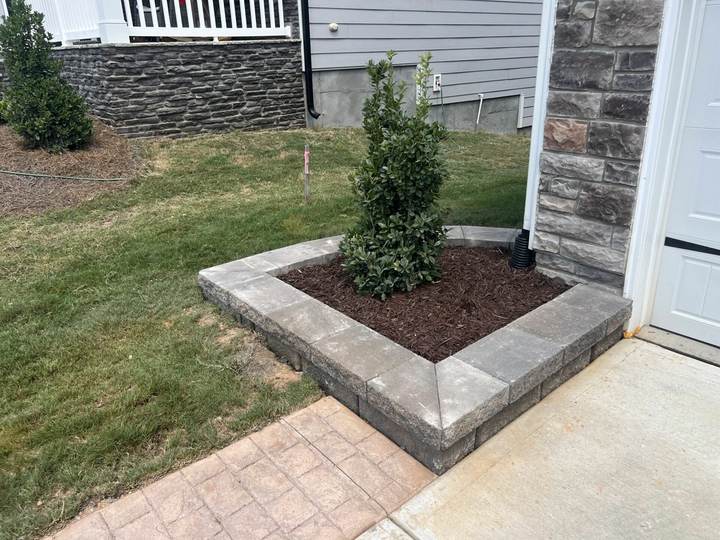
As a Matthews landscaping company with a single team handling design through final installation, we tackle builder-grade yards in a logical order so each step supports the next.
1. Break Up the Compaction
We loosen the compacted subsoil so water and roots can move down through it again. This is the step most quick fixes skip, and it is the one that matters most.
2. Amend the Top Layer
Next, we amend the top layer with real organic matter. That gives new turf and plants a healthy root zone to grow into, and it helps clay hold moisture without turning into a sponge.
3. Correct the Finish Grade
Before any turf goes down, we reset the finish grade so water leaves the house. On rolling Piedmont lots, this can involve real grade changes. Our grading and hydroseeding work handles larger areas where reshaping the ground is part of the plan.
4. Install Turf That Actually Roots
Once the soil profile is fixed, we handle sod installation on a prepared base. In Zone 8a, Bermuda, Zoysia, and Fescue all perform well when matched to sun exposure. We pair new turf with irrigation so the lawn establishes through a Piedmont July instead of burning out.
5. Build Real Beds
Foundation plantings get proper bed prep, amended soil, and clean edging. Our plant installation focuses on choosing plants suited to the light and soil so they grow in rather than hang on.
If you want to talk through your own yard, call (704) 999-0976. Every estimate we write for landscaping in Matthews NC starts with an on-site walkthrough, and you get a clear, itemized proposal that separates grading, drainage, and finish work.
Turning a Blank Backyard Into Outdoor Living Space
Here is the upside of a builder-grade yard. Because there is almost nothing there, you get to plan the space the way you actually want to use it. Many Matthews homeowners use the rebuild as a chance to add a paver patio, a fire pit, a pergola, or even an outdoor kitchen as part of one coordinated rear yard plan.
Planning the hardscape at the same time as the grading and turf work saves rework. Patio base, drainage, and finish grade all get designed together, and the lawn goes in around the finished layout instead of being torn up later. For inspiration, our landscape design ideas for Matthews homes walk through layouts that work well on Matthews lots.
Keeping the Results After the Rebuild
A rebuilt yard still needs care, especially during its first full summer. New sod and plantings need consistent water, beds need mulch to hold moisture, and the lawn needs mowing at the right height for its grass type. Our guide to Matthews landscape maintenance covers what a sensible year round routine looks like in this climate.
Clay never stops being clay. Even after amending, the soil underneath expands and shrinks with each wet and dry cycle. Watching for new wet spots, keeping downspouts discharging away from the house, and topping up organic matter over time all help the yard stay healthy for years.
Common Mistakes We See in Builder-Grade Yards
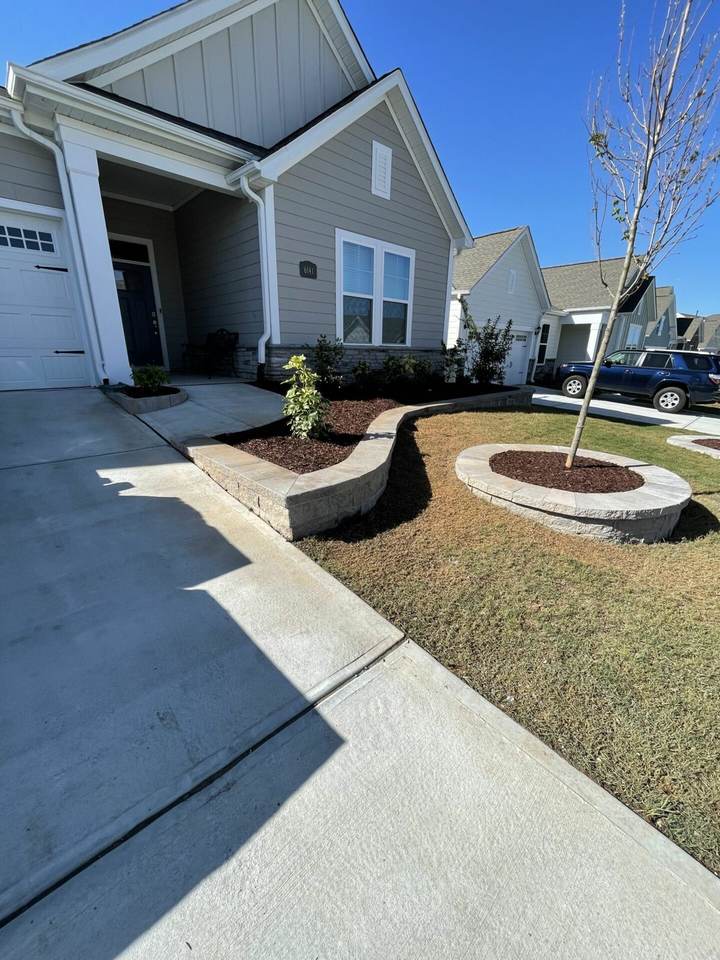
Before homeowners call us, many have already tried a few fixes. Most of them are understandable, but they tend to make the next step harder or simply waste a season.
- Laying new sod over old sod. The new layer sits on the same compacted clay and fails the same way.
- Planting trees too deep. In heavy clay, a hole dug too deep becomes a bucket that holds water around the roots.
- Ignoring downspouts. Gutters that dump water at the foundation keep soil saturated and push runoff across the lawn.
- Building a patio on a thin base. Clay movement shifts pavers when base prep is skipped, and the surface starts to tilt within a few seasons.
- Overwatering to compensate. Extra water on compacted clay mostly runs off or pools, encouraging disease instead of roots.
Good landscaping in Matthews NC is mostly about doing the unglamorous work underneath first. Once the soil and grade are right, every dollar spent on turf, plants, and hardscape goes further.
Why Work With a Local Team for Landscaping in Matthews, NC
JH Landscapes was founded by Justin Hoskins in 2019, and we serve Matthews from our base in Waxhaw, a short drive away. We are licensed and insured, and we carry a 4.9 star rating across 100+ Google reviews. Because one team handles hardscaping, drainage, sod, and planting, your builder-grade makeover does not get split across multiple contractors who each blame the others when something goes wrong.
Frequently Asked Questions
How do I know if my Matthews yard has compacted soil?
Common signs are water running off instead of soaking in, puddles that linger after rain, turf that thins after the first year, and digging that gets very hard a few inches down. An on-site walkthrough can confirm it.
Can I just add topsoil over my existing lawn?
A thin layer on top does not fix compaction below. Roots will still hit the dense clay. The compacted layer needs to be loosened and amended for lasting results.
Should I add a patio at the same time as the yard rebuild?
If a patio is in your plans, doing it alongside grading and turf work is usually smarter. Base prep, drainage, and finish grade can be planned together, and new sod will not get torn up later.
Which grass is best for a rebuilt Matthews lawn?
It depends on sun exposure. Bermuda and Zoysia do well in full sun, while Fescue is often a better fit for shadier areas. We recommend turf after looking at the site.
How can I tell if my builder-grade lawn has a soil problem?
Thinning turf, bare patches that keep coming back, and water that sits after rain are common signs the grass is struggling in compacted clay. The lawn may look fine at first, then decline once the roots cannot reach past that hard layer. If you are seeing this, the root zone usually needs attention rather than just more seed.
Give Your Builder-Grade Yard a Real Foundation
A builder-grade yard is not a lost cause. With the right soil work, grading, and planning, it can become the yard you pictured when you bought the house. Contact JH Landscapes, 2307 Waxhaw-Marvin Rd, Waxhaw, NC 28173, at (704) 999-0976 to schedule a free estimate for your Matthews home.
Ready to turn your builder-grade lot into a yard that lasts? Call (704) 999-0976 or contact us online for a free estimate.
Let's Design Your Patio.
Tell us a little about the yard and how you want to use it. We will follow up within one business day.