
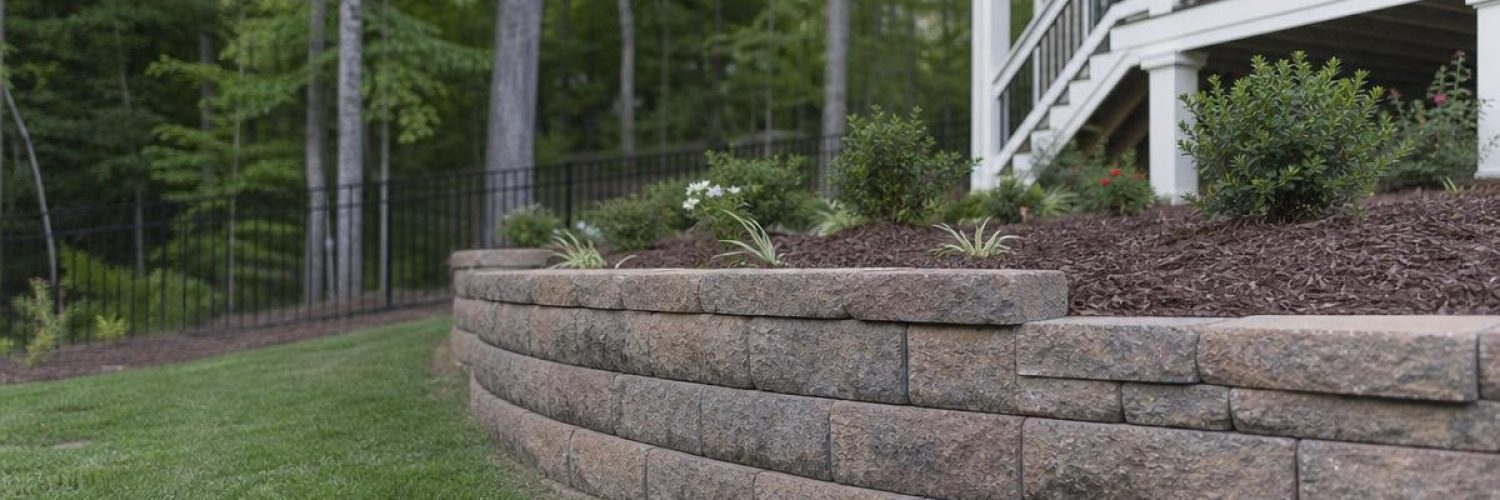
If you’ve been wondering how much a retaining wall costs in Waxhaw, you’re not alone. With the grade changes and heavy clay soil common across Union County, retaining walls are a practical solution for a lot of homeowners here, not a luxury add-on. Most projects in our area run between $3,500 and $10,000 total, depending on height, material, and drainage needs. We build walls that hold up to our local conditions, and we can walk you through real numbers before any work begins.
Ready to get a straight answer on your retaining wall project? Let’s talk.
Key Takeaways
Most retaining wall projects in Waxhaw, NC start at $10,000 and rise in cost depending on size and material.
Wall height is one of the biggest cost drivers, with taller walls requiring deeper footings and more material.
Waxhaw’s clay soil and 45-plus inches of annual rainfall make proper drainage behind the wall a must, not an option.
Walls over 4 feet typically require a permit through Union County Building Inspections and may need an engineering plan.
Material choice, from concrete block to natural stone, can shift your cost per linear foot significantly.
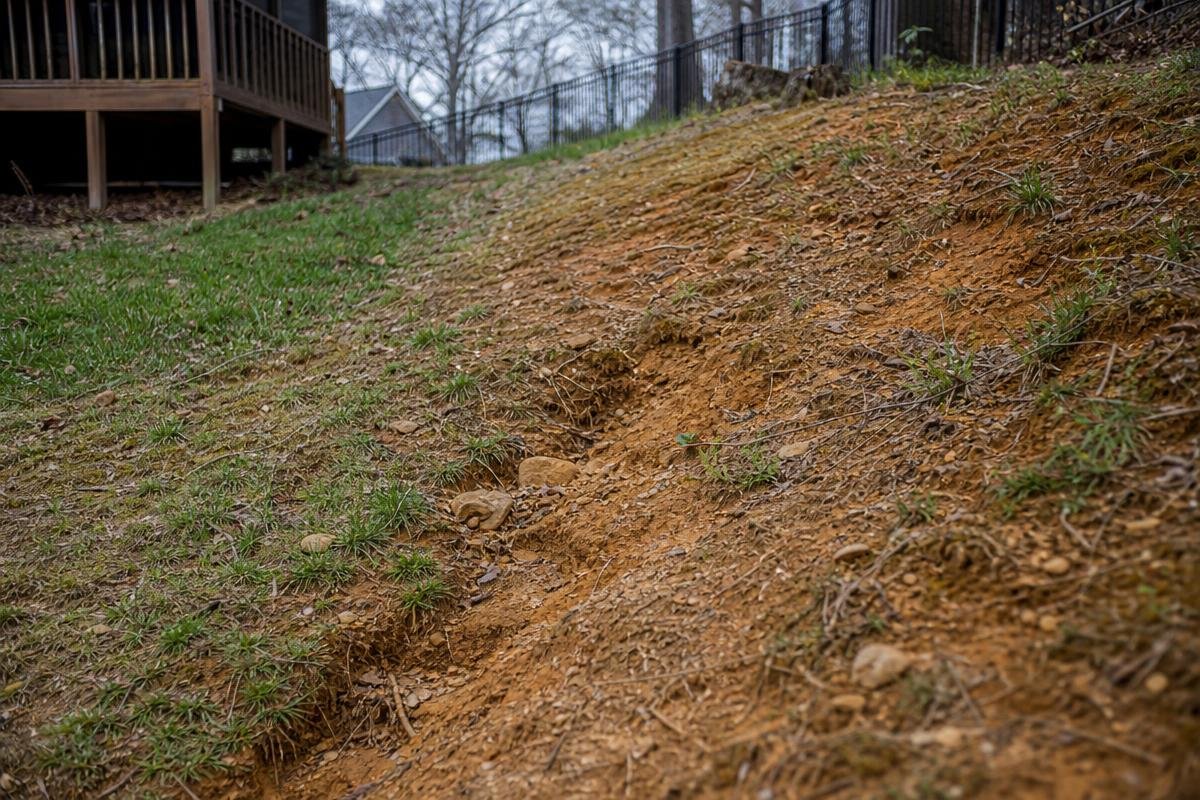
If you own a home on a sloped lot anywhere across Waxhaw and the surrounding Union County area, you already know the problem. Every heavy rain moves a little more soil downhill. The yard gets uneven. Mulch washes out. Eventually, you’ve got a real erosion issue on your hands. That’s not a design flaw in your yard. It’s the Piedmont topography combined with our heavy clay soil, and it affects thousands of homes across this region.
A retaining wall is the practical solution. It holds the grade, stops the erosion, and can actually make your yard more usable. Our retaining and seating walls page covers the design side in detail. This guide focuses on what you actually came here for: the cost.
JH Landscapes has been building retaining walls across this area since 2019. We are licensed in North Carolina and serve Union County and southern Mecklenburg from our home base in Waxhaw. We know what local soil conditions, slope grades, and drainage requirements actually do to a project budget.
This guide gives you real price ranges by material, explains the local factors that push costs up or down, and tells you what to expect when you get a quote. No generic national averages. Just honest numbers from a contractor who works in these yards every week.
What’s the Average Retaining Wall Cost in Waxhaw, NC?
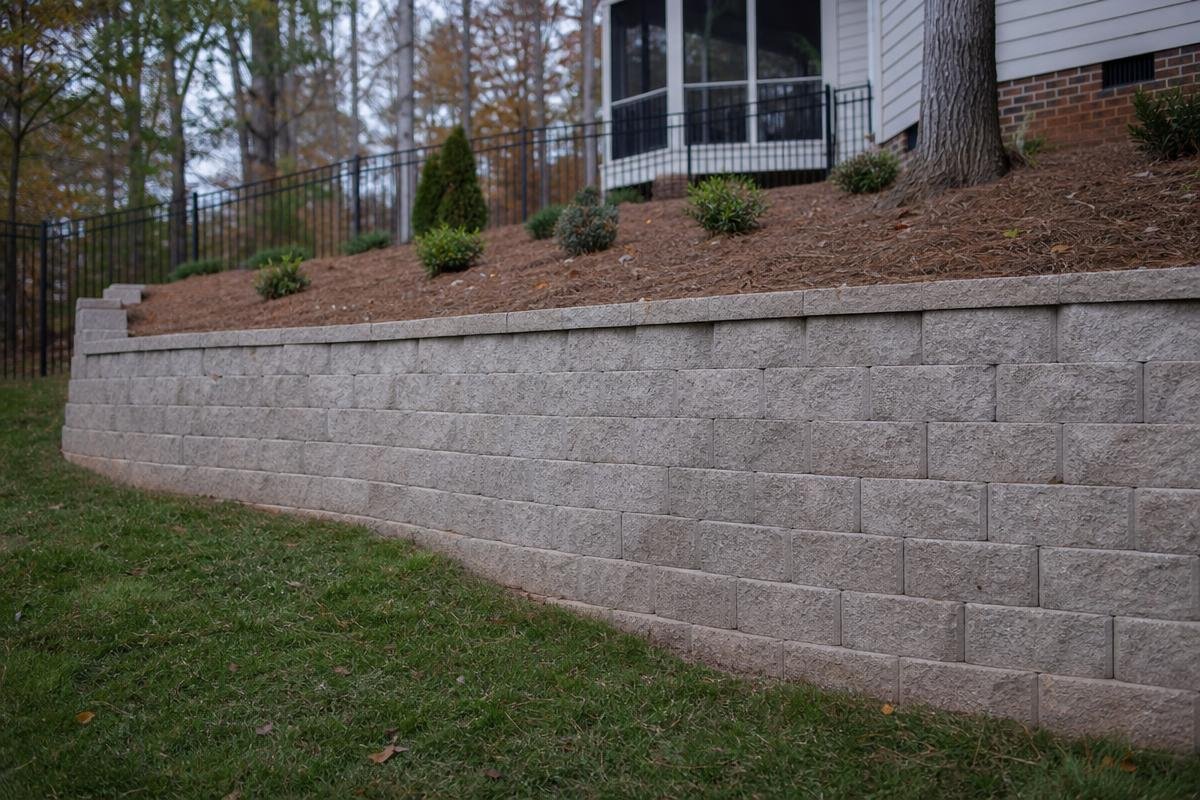
Most homeowners in and around Waxhaw budget between $3,500 and $10,000 for a standard residential retaining wall. Larger walls, engineered designs, or projects with serious drainage challenges can push that number to $20,000 or more. The national average sits around $6,000, but our local soil and regional labor rates tend to push projects toward the higher end of that range.
Typical Price Range for Residential Retaining Walls
Most lots in this part of the Piedmont have grade changes of 2 to 4 feet, which puts most projects squarely in the mid-range pricing tier. The clay soil found throughout the region creates more lateral pressure against a wall than sandy soil would, so it typically calls for deeper footings and better drainage behind the wall, both of which add to the installed cost. You can read more about how our soil behaves in our complete guide to soil amendments for Waxhaw, NC.
If you want to see what a finished wall can do for a sloped yard, our retaining and seating walls service page walks through the options we build most often around here.
Cost Per Linear Foot vs. Cost Per Square Foot
Contractors quote retaining walls two different ways, and mixing them up makes bids impossible to compare. Linear foot pricing measures the wall’s length along the ground. Square foot pricing multiplies that length by the wall’s height. Here’s why that matters: take a 40-foot-long wall that stands 4 feet tall.
At $40 per linear foot, that’s 40 × $40, or $1,600. At $40 per square foot, that’s 40 feet × 4 feet tall × $40, or $6,400. Same wall, a $4,800 difference, purely from how it was quoted. Always ask which unit a contractor is using before you compare numbers.
Here are typical installed ranges by material, quoted per linear foot:
Timber: $25 to $45 per linear foot
Concrete block: $30 to $60 per linear foot
Natural stone: $50 to $125 per linear foot
Poured concrete: $60 to $150 per linear foot
The material breakdown and cost driver sections below go into more detail. The numbers above are your baseline for comparing quotes.
Retaining Wall Cost by Material and Which Option Fits Your Budget
Material choice is the single biggest cost driver for any retaining wall project, and each option comes with real trade-offs for our local climate and soil. The clay soil here creates more lateral pressure than sandy soils, so the right material matters more than just the price tag. Most homeowners land within the $3,500 to $10,000 range for a complete project, depending on what they build with.
Concrete Block and Allan Block Systems
Segmental concrete block systems are the most common choice we install. They run roughly $25 to $45 per square foot installed. The interlocking design flexes slightly with seasonal soil movement, and they handle North Carolina’s mild freeze-thaw cycles without cracking the way mortared joints can. For walls under four feet, this is usually the most practical solution. If you want your wall to pull double duty, our retaining and seating walls page covers how we design block systems that function as outdoor seating too.
Natural Stone and Fieldstone Walls
Natural stone costs more, typically $40 to $70 per square foot installed, but the curb appeal is hard to beat. Homeowners on larger lots in Marvin often choose fieldstone or stacked flagstone because it fits the aesthetic of mature landscaping. The honest trade-off is that mortar joints in natural stone can degrade over time with heavy rainfall, and our area gets 45 to 47 inches a year. Dry-stacked stone holds up better here, but it still needs solid drainage behind it.
Timber and Railroad Tie Walls
Timber walls are the lowest upfront cost, usually $15 to $25 per square foot installed. But in our humid Carolina climate, even pressure-treated lumber starts breaking down in 10 to 15 years. That’s a real consideration when you’re comparing long-term value. For a short-term fix or a low-traffic garden border, timber works fine. For anything structural, masonry will outlast it significantly.
Poured Concrete and Concrete Deadman Systems
Poured concrete is the strongest option and the most expensive, running $50 to $75 per square foot or more. For walls taller than four feet, or anywhere the soil pressure is significant, this is often the right long-term call. Clay terrain puts real stress on taller walls, and poured concrete with a proper drainage system behind it handles that load better than any other material.
Want a per-linear-foot quote for your specific wall? We’ll come look at it and give you real numbers based on your slope and soil.
What Factors Drive Retaining Wall Costs Up or Down?
National cost guides give you a starting point, but they’re not written for Waxhaw or the surrounding Union County lots we work on every week. Several local conditions push retaining wall installation costs well above what you’ll read on a generic pricing site. Here’s what actually moves the number on your quote.
Wall Height and Length
Height is the single biggest cost driver. A 4-foot wall can cost 60 to 80 percent more per linear foot than a 2-foot wall of the same length. That’s not a markup. It’s physics. Taller walls face greater soil pressure, need deeper footings, and require more material throughout. Once you cross the 4-foot mark, engineering requirements often kick in too, which adds another layer of cost. Length matters too, but height changes everything about how a wall is built.
Waxhaw’s Clay Soil and Site Conditions
This is where local conditions really separate our quotes from what you see online. The clay soil across Union County expands when wet and contracts when dry, creating pressure that pushes against your wall year-round. To handle that movement, we typically need deeper footings, gravel backfill, and sometimes geogrid reinforcement for walls over 3 feet. That adds real cost. If your contractor isn’t accounting for this, the wall won’t last. Our complete guide to soil amendments for Waxhaw, NC covers how this clay behaves and why it matters for any outdoor project.
Drainage and Waterproofing Requirements
Hydrostatic pressure is the top cause of retaining wall failure. This area gets 45 or more inches of rain a year, and that water has to go somewhere. Proper drainage behind a wall typically includes a gravel layer, filter fabric, and a perforated drain pipe at the base. Budget $5 to $15 per linear foot for that work alone. Skipping it saves money upfront and costs far more later. If you’re also dealing with a sloped yard that collects runoff, our guide on how to create a rain garden in Waxhaw, NC is worth a read alongside your wall project.
Access and Excavation Challenges
Tight side yards, steep slopes, and mature trees near the wall site all drive labor costs up. If a mini-excavator can reach the site, excavation is efficient. If it can’t, hand-digging adds hours fast. Older neighborhoods with established landscaping are the most common challenge we see. Before you get a quote, think about how equipment would actually reach your site. That access question changes the math more than most homeowners expect.
Do You Need a Permit for a Retaining Wall in Waxhaw, NC?
Yes, in many cases you do. Whether your project requires a permit depends mainly on wall height and location. Skipping this step is one of the most common mistakes homeowners make, and it can cause real headaches when you go to sell your home. Our retaining and seating wall projects always start with a permitting check so nothing surprises you later.
When Permits Are Required in Union County
Union County Building Inspections is the authority for retaining wall permits in this area. Generally, walls over 4 feet tall measured from the bottom of the footing to the top of the wall require a building permit. Walls near property lines, adjacent structures, or in flood zones may need a permit even at lower heights. Permit fees typically run $150 to $500 depending on wall size. Your contractor should pull the permit, not you.
Unpermitted walls are a real resale risk in this active real estate market. Buyers’ inspectors catch them, and lenders sometimes flag them. Getting it done right from the start protects your investment.
Engineering Requirements for Taller Walls
Walls over 4 feet often require a stamped engineering plan from a licensed structural or geotechnical engineer. That adds roughly $500 to $2,000 to your project cost. Given the clay-heavy soil throughout the county, that engineering review is genuinely worth it. Clay shifts with moisture, and that pressure adds up fast on a tall wall. We manage the permitting process for our clients so you do not have to coordinate with the county yourself.
Have questions about permits for your retaining wall project? Call us at (704) 999-0976 and we will walk you through what your specific wall will require.
DIY vs. Hiring a Professional for Retaining Walls in Waxhaw
What DIY Retaining Walls Actually Cost
You can build a retaining wall yourself for roughly $10 to $25 per linear foot in materials alone. That’s about half the professional rate on paper. But before you rent a truck and start hauling block, add up the real costs: plate compactor rental, drainage pipe, gravel, landscape fabric, safety gear, and soil disposal. A 30-linear-foot wall will run you 3 to 4 full days of hard labor. If the wall is under 2 feet tall, on flat ground, and you have easy access, DIY is a fair option. Simple garden borders fit that description. Most residential lots around here do not.
Why Professional Installation Pays Off in This Climate
Here’s where the local conditions matter. Our area gets 45 to 47 inches of rain per year, and the clay soil shifts significantly as it wets and dries. That combination puts serious pressure on any wall that isn’t built with proper base compaction, gravel backfill, and drainage pipe behind it. This is exactly where most DIY walls fail. They look solid in year one. By year three, they’re leaning or crumbling because the base wasn’t compacted deep enough and water had nowhere to go.
Professional installation includes the work that’s easy to skip but impossible to fix later: compacted gravel base, perforated drain pipe, and geogrid reinforcement on taller walls. JH Landscapes has been handling retaining wall installation across the Charlotte metro area since 2019, and we see failed DIY walls regularly. Rebuilding one almost always costs more than getting it right the first time.
If you’re thinking about the bigger picture for your yard, our backyard landscaping ideas for Waxhaw properties can help you plan a space that works together, not against itself. For a closer look at what professional wall construction involves, visit our retaining and seating walls service page.
Does a Retaining Wall Add Value to Your Waxhaw Home?
Yes, and not just in a vague “curb appeal” way. A well-built retaining wall does real work. It turns a sloped, unusable yard into flat, livable outdoor space. In this area, where lots are generous but often graded due to the Piedmont terrain, that extra usable square footage is something homeowners genuinely notice and use every day.
Buyers here have high expectations for outdoor spaces, especially in the newer subdivisions spreading south toward the state line. A quality retaining wall signals a maintained, thoughtful property. It tells a buyer that the yard was designed, not just mowed. That matters at resale, even if you never see an exact dollar figure attached to it.
There is also a protective side to this investment. Our local clay soil shifts and erodes with every heavy rain. Left unchecked, slope erosion can undercut driveways, damage walkways, and eventually threaten your foundation. A retaining wall stops that process. You can read more about how our retaining and seating walls are built to handle these conditions long term.
Walls also pair naturally with other improvements. Many homeowners add a patio installation in Waxhaw, NC right behind or below a new wall to complete the outdoor living space. Most homeowners who go through with a quality retaining wall consider it one of the better outdoor improvements they have made. The function and the look both hold up over time.
How to Get an Accurate Retaining Wall Quote in Waxhaw, NC
Getting a quote is simple. Getting an accurate quote takes a little prep work on your end. Every yard is different. Slope grade, soil conditions, drainage, and access all affect the final number. A site visit is the only way to get a real price. We offer free on-site estimates, so there’s no reason to guess.
What to Have Ready Before Calling a Contractor
The more information you can share upfront, the faster we can give you a useful ballpark before we even arrive. Here’s a quick checklist:
Approximate wall length and height
Photos of the slope from multiple angles
Any known drainage issues in the area
Proximity of trees, structures, or utilities to the wall site
Your general material preference (block, stone, timber)
Having these details ready saves time and helps us come prepared with the right questions for your specific site.
Red Flags to Watch for in Retaining Wall Bids
Not every low bid is a good deal. Some contractors skip steps that matter, and you end up paying twice. Watch for these warning signs:
No mention of drainage or gravel backfill in the scope of work
Contractor suggests skipping permits for walls over four feet
A bid dramatically lower than every other quote you received
No written contract provided
Pressure to pay the full amount upfront before work begins
Our customers across the greater Charlotte area consistently mention clear communication and competitive pricing as reasons they call us back. You deserve both. If you want to see how we approach the full installation process, visit our retaining and seating walls service page for details. JH Landscapes is ready to walk your property and give you a straight answer.
Frequently Asked Questions
How much does a retaining wall cost per linear foot in Waxhaw?
Expect to pay between $30 and $125 per linear foot installed, depending on material and wall height. Our local clay soil adds cost compared to national averages because it requires deeper footings and more drainage work behind the wall. A simple concrete block wall runs closer to the low end. Natural stone or poured concrete pushes toward the top.
What is the cheapest type of retaining wall?
Pressure-treated timber is the lowest upfront cost, typically $25 to $45 per linear foot. The catch is that NC’s humidity accelerates rot, so timber walls usually last only 10 to 15 years. Concrete blocks cost a bit more upfront but hold up far longer. For most homeowners in this area, it’s the better value over time.
Do I need a permit for a retaining wall in Waxhaw, NC?
Walls over four feet typically require a permit and may need a stamped engineering plan. Your contractor should pull the permit, not you. We handle that process for our clients so nothing gets missed.
How long will a retaining wall last in North Carolina?
A properly built masonry wall lasts 25 to 50 years or more. Timber is the exception at 10 to 15 years. The single biggest factor in longevity is drainage behind the wall. With 45 to 47 inches of annual rainfall in this area, water management isn’t optional. Our complete guide to soil amendments for Waxhaw, NC covers how soil quality affects drainage and long-term wall performance.
Can I combine a retaining wall with a seating wall?
Yes, and it’s a popular choice. Natural stone and concrete blocks both work well for combined retaining and seating walls that hold back a slope and give you somewhere to sit. It’s a practical solution that adds function and curb appeal at the same time.
How do I know if I need a retaining wall?
If you’re seeing soil washing downhill after rain, erosion along a slope, or a grade change that makes your yard unusable, a retaining wall is likely the right fix. Homeowners with sloped lots deal with this regularly across the region. A quick on-site look tells us more than any photo can.
Ready to stop guessing and get a real number for your yard? Call us at (704) 999-0976 or visit our office at 2307 Waxhaw-Marvin Rd, Waxhaw, NC 28173 to schedule a free on-site estimate. We’ll walk your property, assess the slope and soil, and give you a clear written quote with no pressure and no surprises.
Ready to Get Started with JH Landscapes?
Call (704) 999-0976 to speak with our team directly. We’re ready to answer your questions, walk you through your options, and help you find the right solution for your needs. Whether you’re just starting to plan or ready to move forward, we’ll make the process simple and stress-free.
Reach out today and let’s talk about how we can help.