
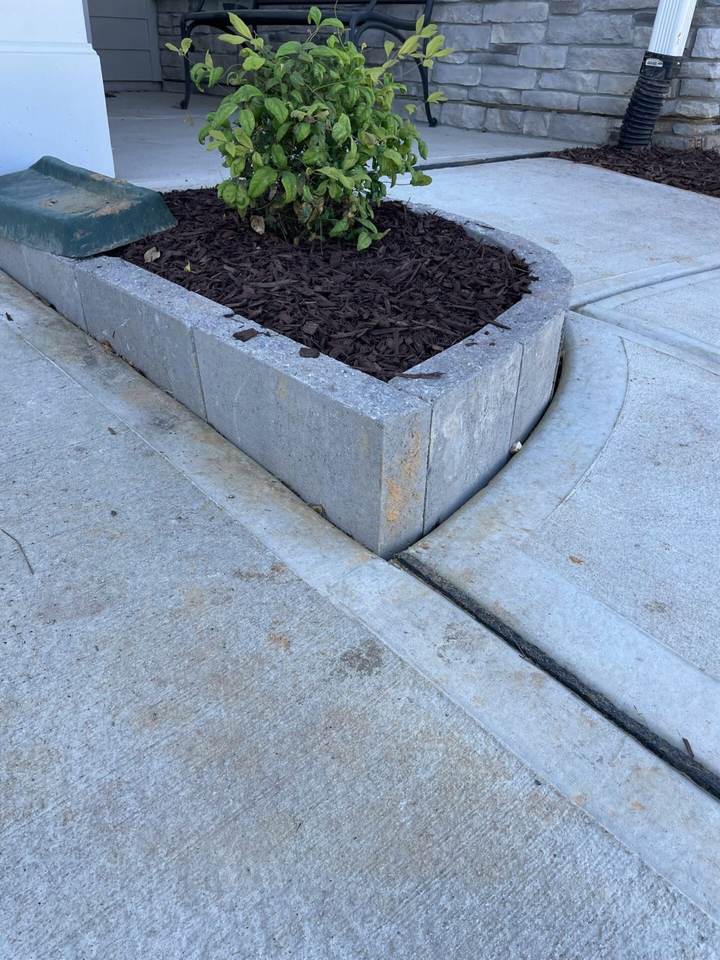
A good border is one of those details that makes a whole yard look finished. It separates the lawn from planting beds, keeps mulch where it belongs, and gives the eye a clean line to follow. Without one, beds tend to blur into the grass, and the yard can look a little unkempt even when the plants themselves are healthy.
Borders also do practical work. They help slow grass from creeping into beds, make mowing and trimming easier and can help hold mulch and soil in place during heavy rain.
This guide shares creative landscape border ideas for Waxhaw NC yards, from simple edging to raised stone borders and living plant edges, along with tips for choosing the style that fits your home.
Want help picking a border that suits your yard? Call (704) 999-0976 to talk with our team.
Key Takeaways
- Landscape borders define beds, keep mulch in place and make lawn care easier.
- Stone, block, brick, metal and living plant borders each create a different look and level of upkeep.
- Raised borders and low walls can add height and help manage soil on gently sloped areas.
- Matching border materials to your home and existing hardscape helps the whole yard feel connected.
- Planning curves, height and drainage before installation leads to a border that lasts.
Why Borders Matter in Waxhaw Yards
Many yards around Waxhaw combine open lawn with foundation beds, tree rings and planting areas along fences or walkways. Borders tie those pieces together. They also help in practical ways. Clay soil and heavy summer storms can wash mulch onto lawns and walkways, and warm-season grasses can spread quickly into beds. A well-built edge gives both mulch and grass a clear boundary.
Borders can also reflect the style of the home. A crisp, simple edge suits a modern house, while natural stone or a softly curved bed can feel right for a traditional or farmhouse-style property.
Simple Trench and Natural Edges
The most basic border is a cut or trench edge, where a clean line is cut between lawn and bed, often with a shallow trench that holds mulch. It costs little in materials and gives a tidy, natural look. The trade-off is upkeep. Trench edges need to be recut from time to time as grass grows back toward the bed.
This style works well for homeowners who like a minimal look and do not mind a little seasonal touch-up, or as a starting point before adding a more permanent border later.
Stone and Rock Border Ideas
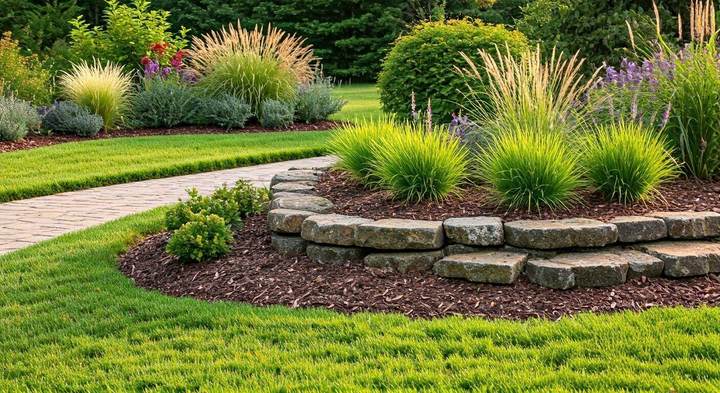
Natural stone is one of the most popular landscape border ideas because it fits easily into many styles. A few ways to use it include:
- Stacked stone borders: Low courses of flat stone create a rustic, layered edge with real presence.
- Boulder accents: Larger stones placed along a bed edge give a relaxed, natural feel, especially in larger beds or around trees.
- River rock bands: A strip of river rock between lawn and bed adds texture and can help in spots where water runs off a roof or walkway.
Stone borders tend to look best when the stone color relates to other features on the property, such as a stone fireplace, walkway or home facade.
Block and Brick Edging
Concrete block and brick borders offer a clean, consistent line and come in many colors and textures. Block edging can be set flush with the lawn so a mower wheel can ride along it, or stacked a course or two high for a more defined bed.
Brick works especially well near brick homes, where it helps tie the landscape to the architecture. Laid end to end, on its side or at an angle in a sawtooth pattern, brick can feel classic or playful depending on how it is installed. Block and brick borders are fairly low maintenance once set on a proper base.
Raised Beds and Low Garden Walls
For more height and structure, a raised border or low garden wall turns a flat bed into a focal point. Curved block walls around front beds, tree rings at the base of a specimen tree and low walls along a walkway all add depth to the yard.
On gently sloped areas, a low wall can also help hold soil and mulch in place. For taller walls or steeper grades, a properly engineered retaining or seating wall is the safer choice, since it needs the right base, drainage and construction to hold up over time.
Metal and Modern Edging
Metal edging, such as steel or aluminum, creates a thin, crisp line that almost disappears into the landscape. It suits modern homes and gardens where the focus should stay on the plants. Because it is slim, metal edging can follow tight curves and is a good choice for borders between gravel paths and planting beds.
Living Borders With Plants

Plants can make a beautiful border on their own or soften a hard edge. Low, compact shrubs can form a neat hedge along a walkway, while ornamental grasses and groundcovers create a softer, more relaxed line. Seasonal color, such as annuals planted along a block edge, can freshen the look of a front bed throughout the year.
When planning a living border, consider the mature size of each plant so it does not crowd walkways or nearby beds as it grows. Our plant installation team can help choose plants that fit the space and light conditions.
Mixing Materials for a Custom Look
Some of the most interesting borders combine materials. A stone edge with groundcover spilling over it, a block wall topped with seasonal flowers or a metal edge holding back a strip of river rock can all add personality. The goal is balance. One or two materials that relate to your home and existing hardscape usually look more polished than many competing styles.
Tips for Choosing the Right Border
Before choosing a border, walk your yard and think about how each bed is used and seen. A few questions to consider:
- Do you want the border to stand out or blend in?
- Will you be mowing right up to it, or is it next to a walkway or patio?
- Does water run across this area during storms?
- Which materials already appear on your home or hardscape?
- How much ongoing upkeep are you comfortable with?
Gentle, sweeping curves tend to be easier to mow around than tight, wavy lines. It also helps to lay out a garden hose to test the shape of a bed before any digging starts.
Planning Borders for Waxhaw Soil and Runoff
Soil and water play a bigger role in border success than many homeowners expect. Much of the Waxhaw area sits on dense red clay that drains slowly and can swell when wet and shrink as it dries. That movement can push lightweight edging out of line or cause stacked borders to lean over time.
A solid base helps prevent those problems. Block, brick and stone borders hold up best when they sit on a compacted gravel base set below the surrounding soil, rather than directly on loose dirt. For metal edging, anchoring stakes driven deep enough to grip firm soil keep the line straight through wet and dry seasons.
It also pays to watch how water moves across your yard during a heavy storm. Borders built across a natural runoff path can trap water and turn a bed into a puddle, or wash out entirely. In those spots, a gap in the edge, a band of river rock or a small drainage improvement lets water pass through while still keeping mulch in place. Low spots near downspouts are worth a close look before any border goes in.
Caring for Your Borders Through the Seasons
Even low-maintenance borders benefit from a little seasonal attention. In spring, walk the edges and reset any blocks, bricks or stones that shifted over winter. This is also a good time to refresh mulch, recut trench edges and pull early weeds along the border line.
Summer growth is fast in the Charlotte region, so trim grass and groundcovers that start to creep over the edge, and keep string trimmers from chipping softer stone or brick. During long dry stretches, check that living borders are getting enough water to stay full and healthy.
In fall, clear leaves and pine needles from along the border so they do not smother plants or hold moisture against the edging. Late fall is also a smart time to plant shrubs and perennials for a living border, since cooler weather gives roots time to settle in before summer heat.
Winter is mostly a time to observe. Note where water pools or where frost heaves shallow edging, and plan repairs or upgrades for spring. A few minutes of care each season keeps borders crisp and helps them last for years.
How JH Landscapes Can Help
JH Landscapes designs and installs outdoor spaces for homeowners in Waxhaw and the greater Charlotte area. Our landscape design process looks at your beds, borders, plants and hardscape together so everything feels connected. We also offer mulch installation to give new or refreshed beds a clean, finished look.
Looking for more inspiration? Our guide to front yard landscaping ideas for Waxhaw NC homes covers more ways to improve curb appeal.
Frequently Asked Questions
What Is the Most Low-Maintenance Landscape Border?
Block, brick, stone and metal borders are generally lower maintenance than a cut trench edge, which needs to be recut as grass grows back. Installing any border on a proper base helps it stay level and in place.
How Do I Keep Grass From Growing Into My Flower Beds?
A physical border, such as block, stone or metal edging, creates a barrier between the lawn and bed. Regular edging along the border and a layer of mulch inside the bed also help.
What Border Works Best Around Trees?
A circular tree ring made of block or stone is a popular choice. It keeps mowers and string trimmers away from the trunk and gives the area a tidy, finished look. Avoid piling soil or mulch against the trunk.
Can a Landscape Border Help With Erosion?
Borders can help hold mulch and soil in place on flat or gently sloped areas. Steeper slopes or areas with heavy runoff may need a retaining wall or drainage improvements instead.
Should My Border Match My Patio or Walkway?
It does not need to match exactly, but choosing materials and colors that relate to your patio, walkway or home helps the yard feel cohesive.
When Is a Good Time to Add Landscape Borders?
Borders can be installed in most seasons. Many homeowners add them when refreshing beds in spring or fall, or as part of a larger landscape project.
Give Your Yard a Finished Look
The right border can make your beds stand out, simplify lawn care and pull your whole landscape together. Whether you prefer natural stone, classic brick, sleek metal or a soft edge of plants, there is a border style that fits your Waxhaw home.
JH Landscapes is ready to help you plan it. Visit us at 2307 Waxhaw-Marvin Rd, Waxhaw, NC 28173, or call (704) 999-0976 to start planning borders for your Waxhaw NC yard.
Let's Talk About Your Yard.
Tell us a little about the yard and how you want to use it. We will follow up within one business day.