
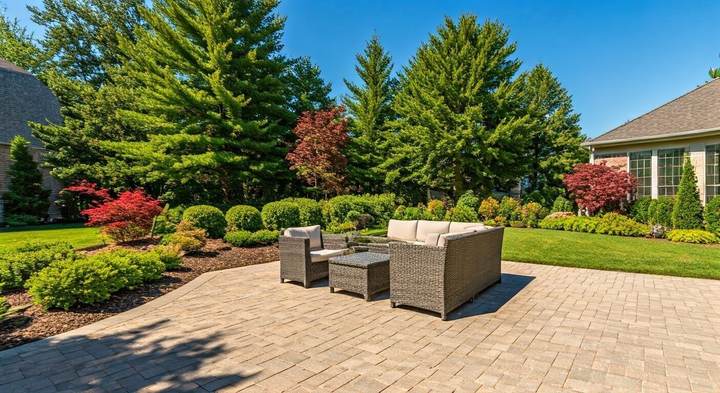
A paver patio or walkway is one of the most durable surfaces you can add to a yard. Still, durable does not mean maintenance free. Leaves, pollen, red clay, summer storms and the occasional winter freeze all leave their mark, and small issues like loose joint sand or a few weeds can turn into bigger repairs if they sit for too long.
The good news is that most paver care is simple. A little routine attention keeps the surface clean, level and safe to walk on, and it helps the pavers keep the look you paid for.
This guide walks through practical paver patio maintenance for homes around Charlotte, NC, including what to do each season, how to handle common problems, and when it makes sense to call a professional.
Not sure if your patio needs a simple cleaning or a real repair? Call (704) 999-0976 and our team can take a look.
Key Takeaways
- Regular sweeping and rinsing handle most of the everyday dirt, leaves and pollen on pavers.
- Joint sand holds pavers in place, so refilling low joints is one of the most important maintenance tasks.
- Pulling weeds early and keeping joints full help limit new growth between pavers.
- Most stains are easier to remove when you treat them quickly with the right cleaner for that stain.
- Sunken, rocking or heaving pavers usually point to a base or drainage issue that is worth having inspected.
Why Paver Care Matters Around Charlotte
The Charlotte area has a climate that keeps outdoor surfaces busy. Warm, humid summers encourage moss and weeds in shady spots. Heavy spring and summer rain can wash joint sand out of the gaps. Fall brings a steady drop of leaves and pine needles, and winter can bring a few freezing nights that test any surface holding water.
Many yards in the region also sit on clay soil. Clay holds water and can shift as it gets wet and dries out, which is one reason a solid base and good drainage matter so much under a patio or walkway. Routine maintenance will not fix a poorly built base, but it does help you spot early warning signs before a small dip becomes a trip hazard.
Routine Cleaning for Patios and Walkways
Most paver patio maintenance comes down to keeping debris off the surface. Sweeping with a stiff push broom every week or two, and more often during heavy leaf drop, keeps organic material from breaking down in the joints where weeds can take root.
A few times a year, give the surface a deeper clean. Rinse it with a garden hose, scrub any dirty areas with a mild soap and water solution or a cleaner made for pavers, and rinse again. If you use a pressure washer, keep it on a low setting, hold the wand at an angle and keep it moving. Spraying straight down at close range can blast sand out of the joints and may damage the paver surface.
Keeping Joint Sand in Good Shape
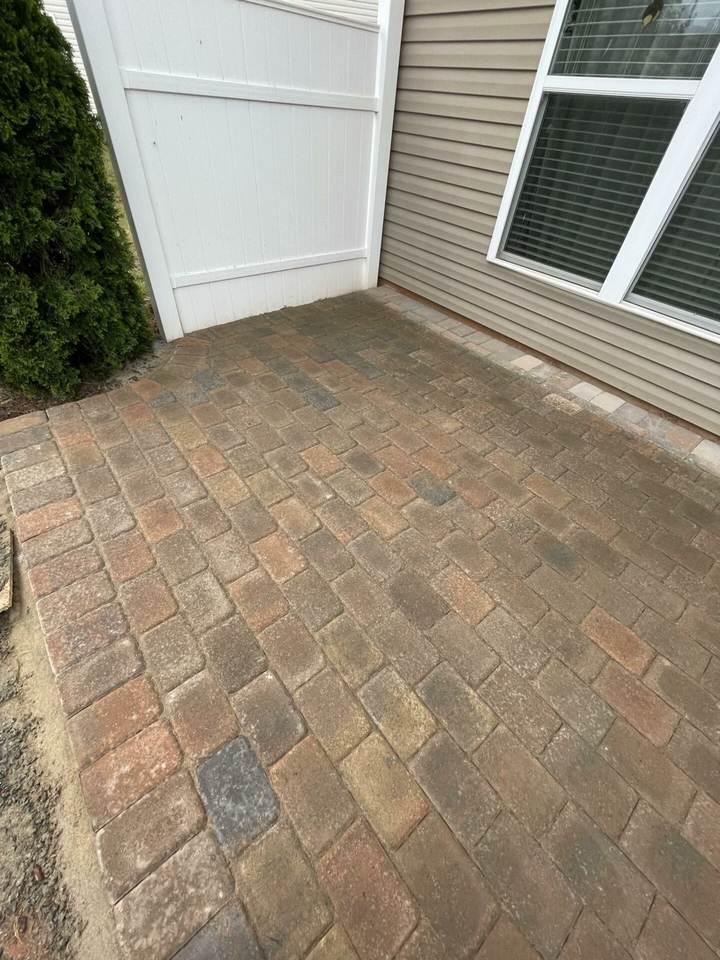
The sand between pavers does more than fill gaps. It locks the pavers together so the surface moves as one piece and helps keep individual pavers from shifting or rocking. When joints get low, pavers can start to move, and the open gaps invite weeds and ants.
Check your joints after big storms and after any pressure washing. If the sand has dropped noticeably below the top edge of the pavers, it is time to refill. Many patios use polymeric sand, which contains a binder that hardens after it is activated with water. It can help resist washout and weeds, but it needs to be installed carefully. The surface must be dry, the sand has to be swept fully into the joints, and any haze left on top of the pavers should be cleared before you wet it, following the product directions.
If you are unsure what kind of sand your patio has, or large sections need to be refilled, a professional can clean out the joints and refill them evenly.
Dealing With Weeds and Moss
Weeds between pavers are one of the most common complaints we hear from homeowners. They usually start in joints that are low on sand or packed with leftover leaf debris. Pulling weeds by hand when they are small, ideally after a rain when the roots come out more easily, is the simplest first step.
Moss and algae tend to show up in shady, damp areas, such as a walkway on the north side of a house or a patio under mature trees. Improving sunlight and airflow by trimming back overhanging branches or shrubs can help. A stiff brush and a cleaner labeled for pavers will usually remove light growth. After clearing weeds or moss, refill any low joints so new growth has less room to take hold.
Removing Common Stains
Stains happen on any outdoor surface. The key is to treat them quickly and use a product designed for the type of stain and the type of paver you have. Test any cleaner on a small, hidden area first.
- Leaf and organic stains: These often fade with sweeping, sunlight and a soap and water scrub. Keeping leaves from sitting on the surface prevents most of them.
- Grease and food stains: Common near grills and outdoor kitchens. Blot fresh spills right away, then use a degreaser made for pavers.
- Rust stains: These can come from metal furniture, planters or some fertilizers. Specialty rust removers for masonry usually work best.
- Efflorescence: This is a white, powdery haze that can appear on concrete pavers as natural salts move to the surface. It often fades over time, and cleaners made for efflorescence can speed that up.
Avoid harsh chemicals that are not labeled for pavers. Some can discolor the surface or harm nearby plants and lawn.
Should You Seal Your Pavers?
Sealing is optional, and whether it makes sense depends on your pavers, how you use the space and the look you want. A sealer can help resist stains, make cleaning easier and, depending on the product, enhance color or add a slight sheen. It can also help hold joint sand in place.
Sealer is not a one-time job. It wears over time and needs to be reapplied, and choosing the wrong product or applying it to a dirty or damp surface can leave a cloudy finish. If you are considering sealing, it helps to clean the surface thoroughly first and talk with a professional about which sealer suits your pavers.
Seasonal Paver Maintenance Checklist
Spring
Spring is a good time for a deep clean. Rinse off pollen, check for pavers that shifted over winter and refill low joints. It is also a good time to look at drainage and make sure downspouts are not dumping water onto the patio.
Summer
Keep up with weeds and sweep regularly. If you cook outdoors, clean up grease spills quickly. Watch shady areas for early moss growth.
Fall
Leaves and pine needles are the main task this time of year. Sweep or blow them off often so they do not stain the surface or break down in the joints. Fall is also a good time to check for low spots before winter rain.
Winter
On the occasional icy day, use a plastic shovel or a broom rather than a metal blade, which can chip pavers. If you use an ice melt product, choose one that is labeled as safe for pavers and concrete and follow the directions.
Signs Your Pavers Need Professional Repair
Some issues go beyond routine care. Watch for pavers that sink, rock underfoot, lift at the edges or create puddles that sit after a rain. These usually point to a problem with the base, the edge restraint or drainage beneath the surface.
The fix often involves lifting the affected pavers, correcting the base, and resetting them, rather than simply adding more sand on top. For walkways, JH Landscapes offers walkway repair to address sunken or uneven sections. If water is pooling around the patio, our drainage solutions can help move water away from the surface and your home.
How JH Landscapes Helps Charlotte Area Homeowners
JH Landscapes builds and cares for outdoor spaces across Waxhaw and the greater Charlotte area. Our team handles paver patio installation, walkways and the surrounding landscape, so we can look at how your patio, planting beds and drainage work together. If your pavers just need ongoing upkeep as part of the yard, our landscape maintenance services can help keep everything looking cared for.
For ideas on new hardscape projects, our guide to paver patio ideas for Charlotte-area homes is a helpful place to start, and Union County homeowners can browse paver patio ideas built for Indian Trail lots.
Frequently Asked Questions
How Often Should I Clean My Paver Patio?
Sweeping every week or two handles most everyday debris. A deeper clean with water and a paver-safe cleaner a few times a year, such as in spring and fall, keeps most patios looking their best.
Can I Pressure Wash Pavers?
Yes, but use a low setting, keep the wand moving and hold it at an angle. High pressure at close range can remove joint sand and damage the paver surface. Refill any low joints afterward.
What Is the Best Way to Stop Weeds Between Pavers?
Keep joints full of sand, sweep often so debris does not collect in the gaps and pull weeds while they are small. Polymeric sand can also help limit weed growth when installed correctly.
What Causes White Haze on Pavers?
White haze on concrete pavers is often efflorescence, which happens when natural salts rise to the surface. It usually fades over time, and cleaners made for efflorescence can help remove it.
Do I Need to Seal My Pavers?
Sealing is optional. It can help resist stains and enhance color, but it needs periodic reapplication. Whether it is worthwhile depends on your pavers, how you use the space and your preferred look.
Why Are Some of My Pavers Sinking?
Sinking pavers usually point to a problem with the base, edge restraint or drainage underneath. The fix typically involves lifting the pavers, correcting the base and resetting them.
Keep Your Pavers Looking Their Best
A paver patio or walkway can stay attractive and functional for many years with steady, simple care. Sweep often, keep the joints full, handle weeds and stains early and keep an eye out for any shifting or sinking.
If your patio or walkway needs more than a cleaning, JH Landscapes is here to help. Visit us at 2307 Waxhaw-Marvin Rd, Waxhaw, NC 28173, or call (704) 999-0976 to talk about your Charlotte area property.
Let's Design Your Patio.
Tell us a little about the yard and how you want to use it. We will follow up within one business day.