
A heavy afternoon storm rolls through, and an hour later most of the neighborhood looks fine. Then you look out back. The bottom of the yard is a shallow pond, the mulch from the side bed has floated onto the lawn, and the grass near the fence line is still squishy two days later. If that sounds familiar, you are dealing with yard drainage in Indian Trail NC, a problem we often see in Union County.
We work across Indian Trail from our base in nearby Waxhaw, and drainage corrections are a service homeowners here ask about often. The reason is not bad luck. It is a combination of red clay soil, rolling terrain, and the way many subdivisions were graded. Understanding those three pieces makes it much easier to choose a fix that actually lasts.
This guide explains why yard drainage in Indian Trail NC is so often a soil problem, how to read the warning signs on your own lot, and which solutions we use to get water moving where it should.
Tired of a soggy backyard after every storm? Call us at (704) 999-0976 and we will come out, walk the lot, and show you where the water is going.
Key Takeaways
- Cecil and Pacolet series red clay compacts hard and sheds water, so poor drainage after rain is usually a soil issue, not just a grading issue.
- Many Indian Trail lots were graded to send water quickly toward the rear property line, which often leaves the usable end of the yard the wettest.
- Sloped lots and flat lots fail in different ways and need different fixes.
- Common solutions include regrading, French drains, catch basins with piped discharge, dry wells, swales, and retaining walls with built-in drainage.
- Drainage should be solved before anything is built on top of it, including patios and new sod.
What Makes Indian Trail Clay So Hard on Drainage
Cecil and Pacolet series soils run through Indian Trail. On higher ground they lean toward sandy clay loam, but in the low spots the clay gets heavy. Heavy clay has very fine particles packed tightly together, so water has a hard time soaking in. During construction, equipment compacts that clay even further. The result is a surface that behaves almost like pavement during a downpour, with water running across it instead of into it.
Clay also expands when wet and shrinks when dry. Over time that movement shifts bases, tilts structures, and loosens anything that was not built with the soil in mind. That is why drainage and hardscape stability are so closely linked here.
The Grade Factor
The defining condition in many Indian Trail neighborhoods is grade. Subdivisions were laid out across rolling Piedmont terrain, and a typical rear yard drops several feet between the house and the back property line. Builders graded lots to move water away from the house quickly, which is good for the foundation, but it sends all of that runoff toward the back of the yard. Add clay that will not absorb it, and you get a wet line at the bottom where everything collects.
Flat Lots Have Their Own Problem
On flatter lots, the issue flips. Instead of water rushing downhill to one spot, it spreads out in a thin sheet across compacted clay and lingers. These yards rarely have one obvious pond, but the whole lawn stays soggy and turf struggles.
Warning Signs to Look For
Before calling anyone, it helps to watch your yard during and after a good rain. These are the signs we look for on a walkthrough.
- Puddles that linger long after the storm has passed.
- Thin, yellowing, or mossy turf in the same low area every season.
- Mulch or soil washing out of beds and onto the lawn or walkway.
- Gullies or small channels forming on a slope.
- Pavers that have sunk or shifted, or a patio that holds water.
- Water collecting against the foundation or near downspouts.
Take a few photos during a storm if you can. They are often more useful than anything else in planning a fix, because they show exactly where water enters and where it stops.
Fixes That Work on Union County Clay
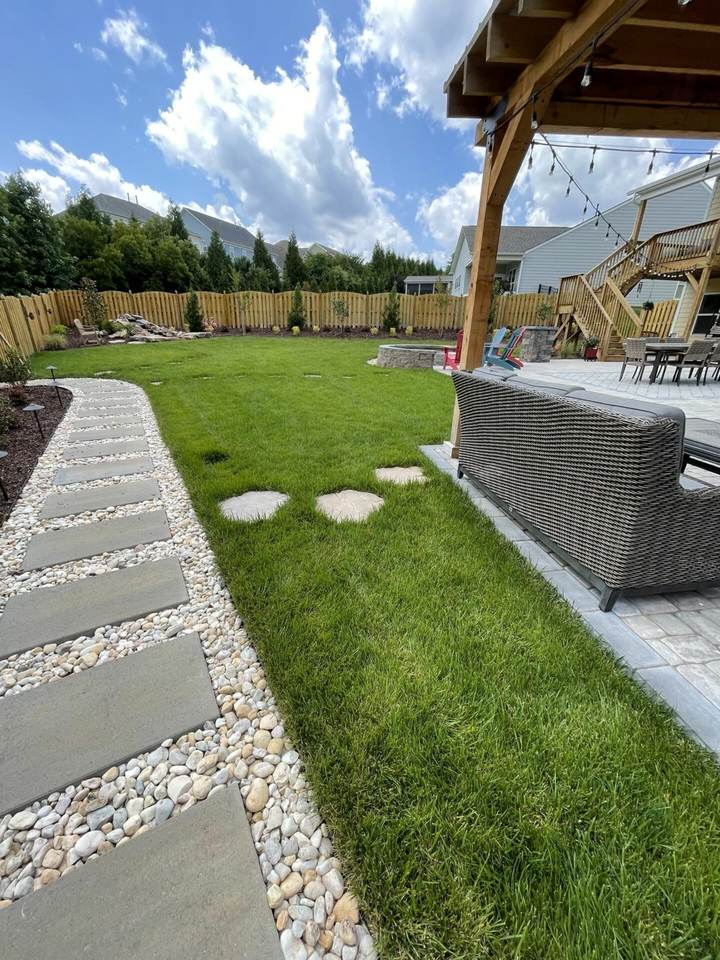
There is no single answer for every yard. The right fix depends on how much fall your lot has, where the water comes from, and where it can legally and practically go. Our drainage solutions usually combine a few of the following.
Surface Regrading
Sometimes the simplest fix is reshaping the ground so water moves in a controlled direction instead of pooling. On flat lots with sheet flow, careful regrading paired with catch basins is often more effective than any wall. Our grading and hydroseeding service handles the reshaping and then re-establishes growth on the disturbed soil.
Catch Basins and Piped Discharge
Where the lot drops to a rear swale, we regrade for controlled flow and add catch basins that collect water at the low point and carry it away through buried pipe. This lets the low corner dry out between storms instead of staying saturated.
French Drains
A French drain is a gravel-filled trench with a perforated pipe that intercepts water moving through or across the soil and redirects it. In clay, French drains are useful along the uphill side of a problem area or behind structures where water builds up.
Dry Wells and Swales
A dry well gives collected water a place to go underground and disperse slowly. A swale is a shallow, planted channel that guides surface water along a chosen path. Both can be good options when a pipe outlet is not practical.
Retaining Walls With Drainage Built In
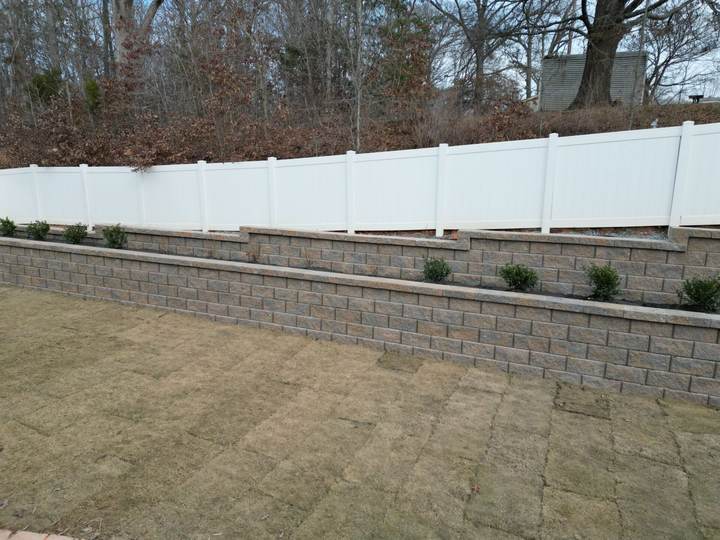
On sloped Indian Trail lots, a two to four foot grade change across the backyard is common. A well-built retaining wall can turn that unusable slope into a level area, and a properly routed drain line behind it keeps the soil from staying saturated. When we design these together, the wall can double as seating and the drainage disappears behind finished surfaces.
Fix Drainage Before You Build
A common mistake we see is building a patio, laying new sod, or planting beds on top of an unsolved drainage problem. The new work looks great for a season, then the clay moves, water pools, and the investment starts to fail. We solve the grade before we build anything on top of it.
If a patio is on your wish list, it is worth planning drainage at the same time. Our post on patio installation in Indian Trail explains why deeper excavation, compaction in lifts, and edge restraint matter so much on Union County clay.
Keeping Drainage Working Over Time
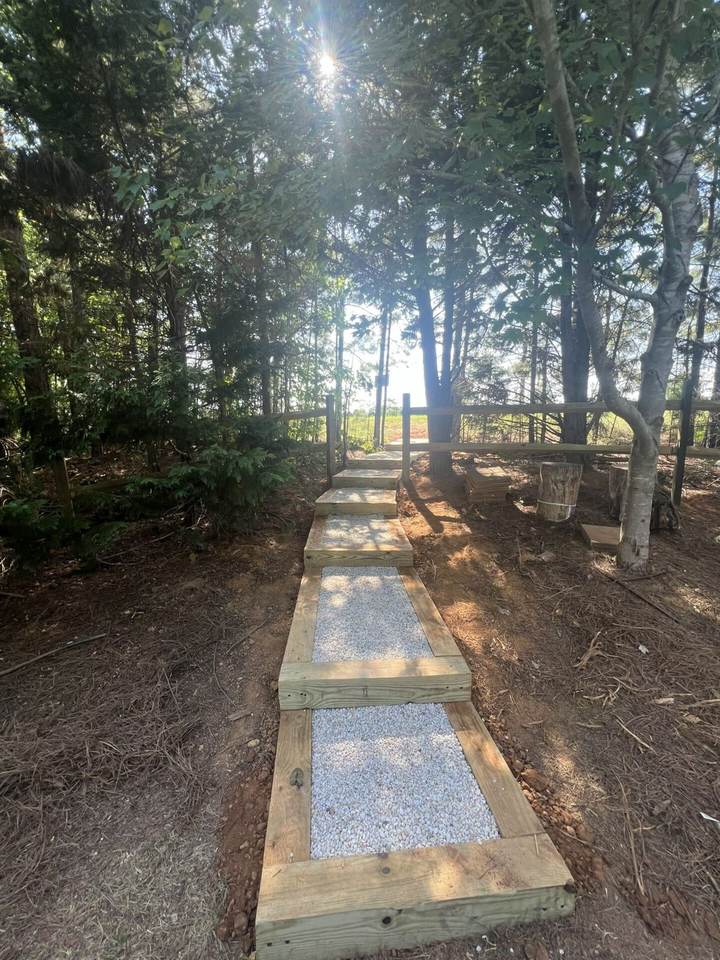
Even a well-designed system needs attention. Catch basin grates fill with leaves, swales get overgrown, and downspout extensions get knocked loose. Regular checks are part of good yard care, which is one reason we cover drainage in our guide to Indian Trail landscape maintenance. A quick look before the wet months and after major storms goes a long way.
How We Approach Yard Drainage in Indian Trail, NC
As an Indian Trail landscaping company working from nearby Waxhaw, we start every drainage estimate with an on-site walkthrough. The amount of fall across your rear yard determines whether a regrade, a wall, a drain system, or a combination is the right answer. You get an itemized proposal that breaks out excavation, base depth, drainage, and finish materials separately, so you can see exactly what you are paying for.
We handle construction, hardscaping, and landscaping under one team, so if a drainage fix leads into a wall, a patio, or new sod, the same crew carries it through. Our work is licensed and insured, and estimates are free.
Solving yard drainage in Indian Trail NC is rarely about one product. It is about reading the clay, the slope, and the path the water wants to take, then giving it a better one.
Frequently Asked Questions
Why does water pool at the back of my Indian Trail yard?
Most subdivisions here were graded to move water away from the house and toward the rear property line. Red clay sheds water instead of absorbing it, so runoff collects at the low end of the lot.
Will adding topsoil fix my drainage?
Topsoil alone usually does not solve the problem, because the compacted clay underneath still blocks water. Breaking up compacted subsoil and correcting grade are typically more effective, often combined with a drain system.
What is the difference between a French drain and a catch basin?
A French drain intercepts water moving through or across the soil along a trench. A catch basin collects surface water at a low point through a grate. Many yards benefit from both.
Should I fix drainage before installing a patio?
Yes. Building on top of an unsolved drainage problem is one of the main reasons patios and walls shift or fail early on clay soil.
How do I know if my yard needs a French drain or a dry well?
It depends on whether there is a convenient place for water to exit through a pipe. If there is no good outlet nearby, we often recommend a dry well so the water has an underground place to disperse. We can look at the slope and layout of your yard and recommend whichever option fits best.
Get Your Indian Trail Yard Draining Properly
If your backyard stays wet long after the rain stops, we would be glad to take a look and talk through options. Reach JH Landscapes at 2307 Waxhaw-Marvin Rd, Waxhaw, NC 28173, or call (704) 999-0976 to schedule a free estimate.
Ready to turn the soggy end of your yard into usable space? Call (704) 999-0976 and we will set up a walkthrough.
Let's Design Your Patio.
Tell us a little about the yard and how you want to use it. We will follow up within one business day.