
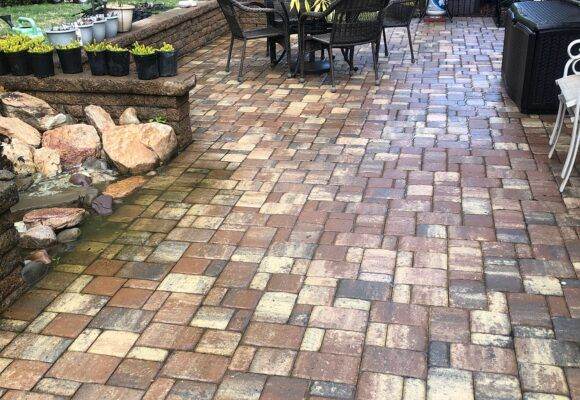
Plenty of Indian Trail homeowners have the same experience. They step out the back door onto a small concrete pad or a builder-grade stoop, look at a yard that slopes away toward the back fence, and wonder where a real outdoor living space could possibly go. When it comes to patio installation in Indian Trail NC, the answer is usually closer than it looks, but it depends on reading the lot carefully before choosing a pattern or a color.
We build paver patios across Indian Trail, often alongside retaining walls and drainage work. That is not a coincidence. The red clay, the rolling terrain, and the way subdivisions here were graded all shape what a patio needs to look good in its first summer and still sit level years later.
Below we share practical paver patio ideas that suit Indian Trail yards, along with the site factors that make or break patio installation in Indian Trail NC.
Have a sloped backyard and a patio idea you want to talk through? Call us at (704) 999-0976 and we will walk the lot with you and sketch out what fits.
Key Takeaways
- Start with how you want to use the space, then size and shape the patio around that use.
- On sloped lots, a retaining or seating wall can turn an unusable pitch into a level, framed patio area.
- Union County clay swells and contracts, so deeper excavation, compaction in lifts, and edge restraint are essential.
- Drainage should be solved before the patio is built, not after.
- Fire features, lighting, and plantings help a patio feel finished and usable in the evening.
Start With How You Want to Use the Space
The best patio ideas begin with a simple question: what will you actually do out there? A patio for morning coffee for two is very different from one that seats a dozen people around a fire pit. Think about the furniture you want, how many people you usually host, and whether you want separate zones for dining and lounging.
It also helps to watch the yard at different times of day. Notice where the shade falls in the late afternoon, where the breeze comes through, and how the patio would connect to the back door. A patio that sits naturally on the path people already walk tends to get used far more than one placed out in the middle of the lawn.
Paver Patio Ideas for Indian Trail Yards
Turn a Slope Into a Level Terrace
A two to four foot grade change across a rear yard is common in Indian Trail. Instead of fighting that slope, use it. A well-built retaining and seating wall can hold back the grade and create a flat, framed area big enough for a patio and fire feature. When we design these together, the wall doubles as built-in seating, which saves space and makes the area feel finished.
Extend the Living Space Off the Back Door
For many newer homes with a small pad or stoop, the simplest upgrade is a larger paver patio that steps directly off the back door. This makes the patio feel like an extension of the kitchen or family room, and it is easy to use every day.
Create Separate Zones
On larger Indian Trail lots, a single large slab can feel empty. Breaking the space into connected zones, such as a dining area near the house and a lounge area around a fire pit a few steps away, gives the yard structure and purpose. A short paver walkway or change in pattern can define each area.
Add a Fire Feature
A fire pit or outdoor fireplace makes a patio usable well into fall. A fire pit is a natural centerpiece for a seating wall layout, and it gives the space a focal point even when it is not lit.
Use Borders and Banding
A contrasting border or band of pavers around the edge helps a patio look intentional and finished. Borders also visually tie the patio to walkways, steps, and walls so the whole space reads as one design.
Soften the Edges With Plantings
A patio surrounded by bare lawn can feel exposed. Planting beds along the edges, especially where a seating wall meets the yard, soften the hardscape and help the space feel tucked in. Choose plants that suit the sun and shade on that side of the house, leave room for them to grow without crowding the pavers, and finish the beds with mulch to hold moisture through the July heat. Planned together with the patio, plantings make the whole backyard read as one finished design rather than a slab dropped onto grass.
Plan for Evening Use
Low-voltage lighting along steps, wall caps, and plantings makes a patio safer and more inviting after dark. Many Indian Trail homeowners add lighting at the same time as the patio so wiring can be planned before the pavers go down.
What Patio Installation on Clay Requires
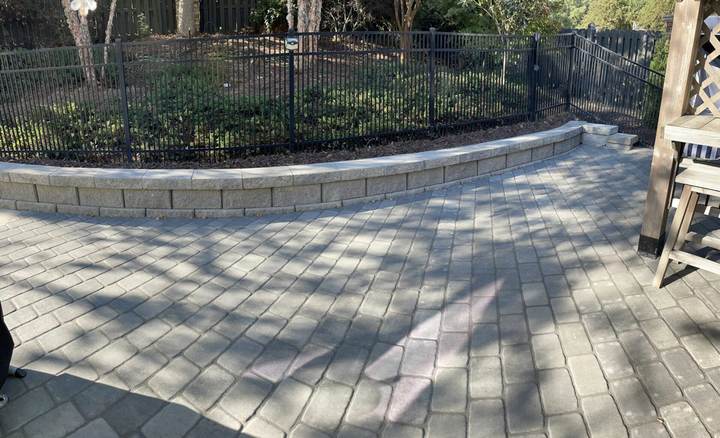
The prettiest pattern in the world will not hold up if the base underneath it fails. In Indian Trail, Cecil and Pacolet series clay swells when wet and shrinks when dry, and that movement shifts pavers when base prep is skipped. Here is what we focus on.
Deeper Excavation
Clay excavation is more involved than it looks, especially in low spots where the soil is heaviest. We dig deep enough to remove unstable material and leave room for a proper base.
Compaction in Lifts
Our paver patio installation work uses compacted stone base built up and compacted in layers, with six inches of compacted stone under every paver. Skip that step and the surface can start to wave within a year.
Edge Restraint
Every free edge of the patio gets edge restraint so pavers cannot creep outward as the soil moves. This is a small detail that makes a big difference in keeping the surface level over time.
Drainage First
Many Indian Trail subdivisions were graded to move water toward the rear property line, so the usable end of the yard is often the wettest. Building a patio on top of an unsolved drainage problem is one of the most common reasons patios fail early. If your yard holds water, read our guide to Indian Trail yard drainage before you finalize a layout.
Dealing With Humidity and Mildew
Zone 8a heat and humidity build algae and mildew on patios quickly, especially in shaded spots. Choosing a paver color and texture that hides minor staining, leaving room for airflow, and keeping plantings from crowding the edges all help. Regular cleaning is part of good upkeep, and our post on Indian Trail landscape maintenance covers how hardscape care fits into a year-round plan.
Paver vs. Other Patio Materials
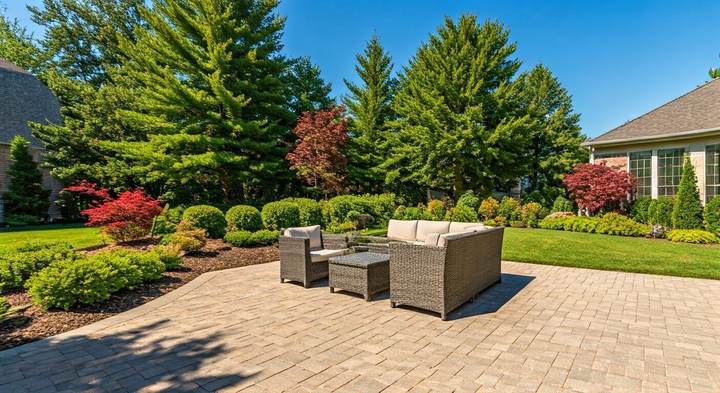
Pavers are popular in Indian Trail for good reason. Individual units can flex slightly with soil movement, and a single damaged paver can be lifted and replaced. That said, the right material depends on your style, budget, and site. We walk through options during the estimate and explain which ones hold up best here. Our broader patio installation page covers the full range of options we build.
How We Plan Patio Installation in Indian Trail, NC
As a team providing landscaping in Indian Trail, NC from our base in nearby Waxhaw, we start every patio estimate with an on-site walkthrough. The amount of fall across the yard tells us whether a wall, a regrade, or both is needed. You then get an itemized proposal covering excavation, base depth, wall drainage, and finish materials separately.
Construction, hardscaping, and landscaping all run through one team, so the patio, any walls, drainage, sod, and lighting stay on one schedule. We are licensed and insured, and estimates are free.
Patio installation in Indian Trail NC works best when the design starts with how you live and the build starts with what the soil needs. Get both right, and the space stays level and inviting for years.
Frequently Asked Questions
How do you keep a paver patio from shifting in Union County clay?
We use deeper excavation, compacted stone base built up in lifts, and edge restraint on every free edge. Solving drainage before building is just as important.
Can I build a patio on a sloped backyard?
Yes. On many Indian Trail lots, a retaining or seating wall creates a level area for the patio while also framing the space and adding seating.
Can a larger patio project be phased?
Many homeowners phase bigger projects, for example building the wall and patio first and adding a fire feature or lighting later. We can plan the layout so future phases fit cleanly.
Do you serve neighborhoods across Indian Trail?
Yes. We work across Indian Trail, from established neighborhoods to the newer subdivisions along the Hwy 74 corridor and Old Monroe Road.
What paver patio idea works best for a small backyard in Indian Trail?
For smaller yards we often recommend extending the patio right off the back door so it feels like a natural part of the house. Breaking the remaining space into a dining spot and a cozy lounge area near a fire feature can also help a small yard feel organized rather than cramped. We look at how you move through the yard day to day before suggesting a layout.
Build a Patio That Stays Level
If you are ready to turn an unused backyard into a space you will actually enjoy, we would be glad to help you plan it. Reach JH Landscapes at 2307 Waxhaw-Marvin Rd, Waxhaw, NC 28173, or call (704) 999-0976 for a free estimate.
Ready to start planning your new patio? Call (704) 999-0976 and our team will schedule a walkthrough.
Let's Design Your Patio.
Tell us a little about the yard and how you want to use it. We will follow up within one business day.